


I am generally not in the Elon Musk prediction business, because he can say and do whatever he wants. Musk can sue anyone, anytime, which is what he recently did to Sam Altman and OpenAI, despite having put zero effort or forethought into the case itself, which was tossed due to statute of limitations. (In fairness, I did cautiously predict that Musk would lose after I watched his cross-examination, but I did not feel great about it, and he’s since pledged to appeal, so who knows.)
Musk can take over and ruin Twitter, the only social media platform that sometimes had intelligible discourse. He can rebrand it as “X,” which makes no sense, but fulfills a decades-old obsession with the letter itself. He can boast about how, under his leadership, X’s revenues will someday quintuple. (Hasn’t happened, won’t happen, doesn’t matter.) He can do a Nazi-looking salute and then say “no I didn’t.” He can post racially-charged screeds for hours, and then writers like me contort and soften our descriptors of Musk’s actions and language, because, as I already mentioned, he’s able to sue anyone, anytime.
Musk can father an unlimited number of children, and disown them and/or ignore them when he feels like it. He can essentially call Donald Trump a pedophile, allege that the president is in the Epstein Files, then end up in the Epstein Files himself—a series of events that resulted in zero professional repercussions and in fact ended with Musk becoming the president’s friend again. (They just traveled to China together!)
Musk can employ teenage minions to tear down life-saving government agencies, and then evade subpoenas and depositions that would compel him to answer for DOGE’s actions. He can hand out cash to American voters, despite cut-and-dry laws against election bribery, and face, at most, a civil lawsuit—nothing criminal. He can hoard money in his alleged charity, and not disperse the minimum amount required by law, year after year.
Musk can integrate Grok, a shitty AI chatbot, into his revamped, borderline-unusable social media platform, thus making X an even more unpleasant user experience. His AI company, xAI, can utterly fail to employ safety guardrails that would otherwise prevent Grok from producing nonconsensual deepfake porn. Even after a slew of lawsuits and investigations about the deepfake porn, Musk’s Grok can simply continue generating the exact same sexualized, abusive content. Just less than before.
Musk can also make outlandish claims about his businesses and what they actually offer regular people. He can boldly posture as though he’s inventing the concept of a tunnel, hype up 155-mile-per-hour autonomous vehicles that zoom past traffic underneath the Las Vegas Strip, and ultimately deliver a tiny-ass “Vegas Loop” where human drivers ferry passengers to one of a handful of drop-off points at 35 miles per hour. Undeterred by this obvious failure, Musk can wishcast about building a California “Hyperloop” system that “would be a technological marvel exceeding any high speed rail on Earth,” and people will conclude that he’s onto something.
Musk can similarly overpromise and underdeliver on his prized Tesla cars, which have design flaws that are alleged to have severely injured and killed people. Musk has been touting the potential of self-driving Teslas for a decade, and longtime owners are still waiting for him to deliver. Same with Tesla robotaxis. As Bloomberg recently chronicled, in July 2016, Musk foresaw “complete autonomy” for his robotaxis “in less than two years.” That, obviously, has not happened. Tesla’s “robotaxis” fleet reportedly totals 59 vehicles, despite Musk’s prior prediction that there would be 500 robotaxis in the city of Austin alone by the end of 2025. Who cares! Tesla’s stock is up year-over-year.
On top of everything else, Musk can fantasize about traveling to Mars, colonizing Mars, whatevering on Mars—and throw out various timelines for space conquest that do not make any sense—and supposed experts will respond by saying that he is “innovative.” Musk’s extraterrestrial ambitions are gibberish. He merged xAI into SpaceX, now his biggest company, because he can. He says SpaceX is going to put factories on the moon and AI data centers into space. I wish I could say, “Heyo, if you believe that, I have a spacebridge to sell you.” Alas, SpaceX just set a record IPO price: $135 a share. It is valued at $1.77 trillion, which is also a record.
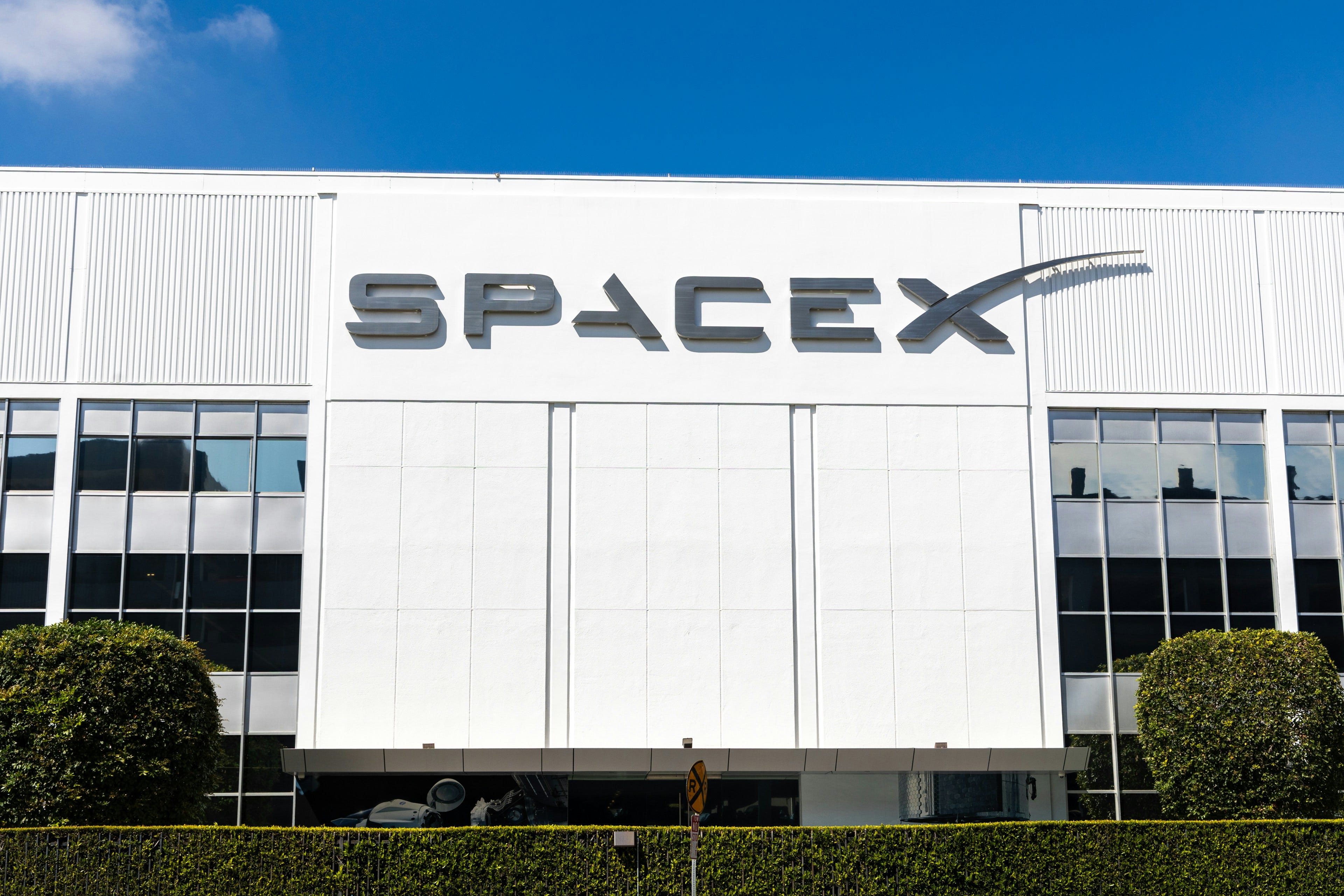
As a result of SpaceX’s valuation, Musk is a paper trillionaire as of Thursday afternoon. I have seen some dispiriting statistics about what one trillion dollars of wealth represents. For instance, from The Guardian: “To a trillionaire, $100 million feels like $19.27 to the median American.” According to USA Today, if you tried to stack $1 bills until you reached $1 trillion in cash, that stack would be 67,866 miles high. I saw another statistic that Musk could buy every single NFL and NBA franchise and still have plenty of money left over.
Will SpaceX ever regularly turn a profit? Will it accomplish even some of its stated goals? These are reasonable questions for businesses that are not run by Elon Musk. The power of Musk compels retail investors, some of whom seem to have chased after SpaceX stocks specifically because of the company’s farfetched business model. If Musk endorses it, then that’s good enough. He is a walking, talking, self-fulfilling prophecy.
It is evident that Musk’s hubris is only outpaced by his luck, which is now, frankly, outpaced by his wealth. Are there any limits to his sway? I…don’t know. Musk wanted to become a paper trillionaire, and now he is one. Because he can.
Here’s what else we’re reading this week:
Polymarket is technically not legal in the United States. And yet, according to a new study cited by Wired, roughly 30% of trading volume on the platform—tens of billions of dollars—comes from the U.S.
In an effort to pretend it’s monitoring prediction markets like Polymarket, the Commodity Futures Trading Commission (CFTC) proposed loose parameters this week that would make it easier for the CFTC to regulate the most egregious forms of sports bets and “virtually all bets on war, terrorism or assassinations,” the Wall Street Journal reported. In theory, that’s a welcome step, but as always with the Trump-led CFTC, the devil is in the details (or lack thereof). The WSJ added that the CFTC isn’t suggesting an “outright ban trading on any specific types of so-called event contracts.” It’s just outlining “factors that regulators will use to review certain types of contracts on a case-by-case basis.”
The San Francisco Standard published an autopsy about San Jose Mayor Matt Mahan’s disastrous run for California governor. It’s sourced to nearly a dozen people, and details how Mahan was squashed like a bug by a weak slate of opponents. Big Tech founders and CEOs talked up Mahan like he was the steady, reasonable choice to oversee America’s most populous state, but Mahan couldn’t keep tabs on his own campaign staff, let alone 39 million Californians. Internally, there was reportedly “bitter staff infighting, an overreliance on wealthy tech donors, and a fundraising strategy so badly timed it left the coffers nearly empty when voters finally started paying attention at the close of the race,” wrote Hannah Wiley.
Anthropic CEO Dario Amodei gave a pathetic interview to Bloomberg, during which he admitted he has no clue whether Anthropic’s AI model played a role in the missile strikes that killed 120 Iranian schoolchildren earlier this year. The strikes almost certainly came from the U.S. military, which is taking its sweet time “investigating” the matter. “The principle that we have established, and I think the principle that was obeyed here, is a human makes the final decision,” Amodei said. “I don’t know what role Claude or any other AI had, but if this isn’t an illustration why that principle is so important, I don’t know what is.” Amodei and the U.S. military are establishing a nice little feedback loop of plausible deniability. If AI assists in the massacring of children, the AI company can blame the human who pressed the “kill” button; alternatively, the human can claim that they only pushed the “kill” button because the AI tools erred and provided mistaken intel.
Here’s an interesting New York Times essay from John O’Farrell, a former general partner at Andreessen Horowitz, about how “the most powerful players in A.I.—led by some of my friends and former partners, to my great sadness—have raised hundreds of millions of dollars to forestall a more serious and meaningful debate about how A.I. should be governed.”
Not sure if you’re contemplating investing in SpaceX, but if you are, it may be worth pausing before making a decision. Lately, I’ve been reflecting on artificial intelligence. On one hand, it can be a remarkable tool that helps us navigate challenges, learn, and solve problems. On the other, I wonder whether it is becoming something more addictive than empowering—a technology that promises to improve life while quietly increasing our dependence on it. Whether it ultimately serves humanity or diminishes something essential remains to be seen. For me, gain is not measured solely in financial terms. The deepest gains come from integrity, self-respect, and living in alignment with one’s conscience. Money can increase a bank account, but only integrity increases the value of a life.
Elon Musk has positioned himself brilliantly at the intersection of space exploration, artificial intelligence, and human ambition. Many see innovation and vision. Yet I cannot help but wonder whether our collective vulnerabilities—fear of missing out, greed, and the desire for certainty and significance—are also being leveraged in the process. How does that sit with you?Just food for thought.
💫 Follow your heart. ❤️