

During the first week of the Musk v. Altman civil trial, Elon Musk treated his time on the stand—approximately nine hours in all—with an unearned bravado, like he’d bravely volunteered for one of those “1 vs. 20” Jubilee debate videos.
Epic Bacon Memes were practically oozing out of Musk during the extensive cross-examination delivered by OpenAI lead attorney William Savitt. Musk complained that Savitt’s questions were “designed to trick me, essentially,” and “definitionally complex, not simple,” the sort of retorts that must hit like crazy for:
Elon Musk stans
A teenager arguing with a middle school guidance counselor
A near-trillionaire who converted a once-popular social media platform into his daily affirmations chatbot
I skipped jury selection on Monday, April 27, but was in the courtroom for the rest of the week. On Wednesday, April 29, I wrote that the trial was an “unavoidable circus,” in no small part because of the aforementioned Elon stans.

A woman was reprimanded by Judge Yvonne Gonzalez Rogers for immediately taking a photo in the courtroom; she was allowed to stay, and mostly stared at Musk like he was Medusa. A guy snuck in from the “overflow” room, put on his AirPods, and pretended not to hear anyone telling him he needed to leave. On Thursday, another woman waited in line for hours to get into court, and as Musk’s testimony wore down, donned a sleep mask and passed out.
It was especially unnerving to watch a group of college students vigorously nod along whenever Musk trotted out a tortured analogy that was supposed to clarify the logic behind his lawsuit, which alleges “breach of charitable trust” and “unjust enrichment”—basically, that cofounders Sam Altman and Greg Brockman took advantage of Musk’s generosity ($38 million in funding), and then conspired to transform OpenAI from a nonprofit into a for-profit company.
One such tortured analogy: Musk left OpenAI’s board in 2018, and claims that even then, he was concerned about the organization’s growing, profit-driven priorities. But he didn’t actually sue until 2024. His explanation? “If someone might steal your car,” he said, that’s not the same as someone actually stealing your car. In Musk’s retelling, Altman and Brockman did not “steal the car” until, coincidentally, Musk had decided to create his own AI company and chatbot (Grok).
On Thursday, April 30, Musk was mercifully excused, and his fixer Jared Birchall took the stand. It was apparent how he became Musk’s money guy: he breezed through most of his testimony, ducking and dodging through cross-examination. Musk dug himself quite a hole, but with a few more solid witnesses like Birchall—and with the notoriously duplicitous Altman and MAGA super donor Brockman still due—I was beginning to fathom a somewhat-conflicted jury.
Out of nowhere, Birchall’s leisurely jog ended with a face-plant. He commented on xAI’s $97.4 billion bid for OpenAI’s nonprofit arm in 2025, a topic that was supposed to be taboo at trial. As OpenAI’s attorneys later complained to Gonzalez Rogers, they tried to obtain documents and communications about xAI’s bid during discovery, but were blocked from doing so by the plaintiffs, who cited privileged communications. The only reason Birchall even broached the topic is because one of Musk’s own attorneys—Marc Toberoff, who was apparently directly involved in organizing the bid—inexplicably chose to ask Birchall about it in front of the jury.
Why did Toberoff want to “open the door?” No idea. After the jury was excused for the day, Gonzalez Rogers let OpenAI’s attorneys pepper Birchall with questions about his knowledge of the xAI bid. His answers were surprisingly evasive, even for a stone-faced fixer. “I’m still struggling with how you can have conversations with these individuals to raise [$97.4] billion but have no recollections even in a general sense,” she said, as first reported by The Verge’s Elizabeth Lopatto. Later, Gonzalez Rogers let off a frustrated zinger: “You must have been very convincing,” she said. “You’re not very convincing today.”
As Lopatto noted in her Thursday write-up, it’s unclear what will come of Team Musk’s latest screw-up. At a high level, the xAI bid looks like yet another effort by Musk to meddle with the nonprofit that he left in a huff. Any ensuing discussion of the bid is bad news for Musk, and good news for OpenAI, whose attorneys are trying to paint the picture that Altman and Co. are being picked on and interfered with by a vindictive ex-board member.
So far, OpenAI is succeeding. I went into last week with an open mind about how Musk v. Altman might turn out. I (foolishly) figured that Musk, with the help of his well-compensated attorneys, might actually put in the necessary legwork and come prepared to argue his case. I considered Musk and Altman to be relatively equal, as far as their untrustworthiness and thirst for power.
I even saw the logic in Musk’s lamentation that OpenAI has abandoned its charitable mission, and ought to be called out for it. The organization has restructured as a for-profit, and it’s likely going to IPO this year! In fact, the weakest part of OpenAI’s cross-examination came on Thursday, April 30, when lead attorney Savitt asked Musk if he was aware of all the wonderful things OpenAI’s nonprofit arm does for the world. Did Musk know that OpenAI is on such-and-such safety commission? That it studies such-and-such research initiatives?
Stacking OpenAI’s research and safety efforts against xAI’s is sort of like the coach of a 1-16 NFL team taking a victory lap for beating an 0-17 NFL team. It’s not a compelling consideration for the jury. Nor are the intricacies of OpenAI’s structure. I am in the top .1% of people who understand what’s going on with this case—which is not a brag, I assure you—and I was regularly getting confused during the trial (particularly during the Birchall snafu). If I was a jury member just now catching up on the history of OpenAI, as well as its evolving for-profit setup, my head would be spinning. Naturally, I’d revert to which side sounds more believable, and more authentic, on the stand. Who is putting in the requisite effort? Who’s acting like a somewhat normal human being?
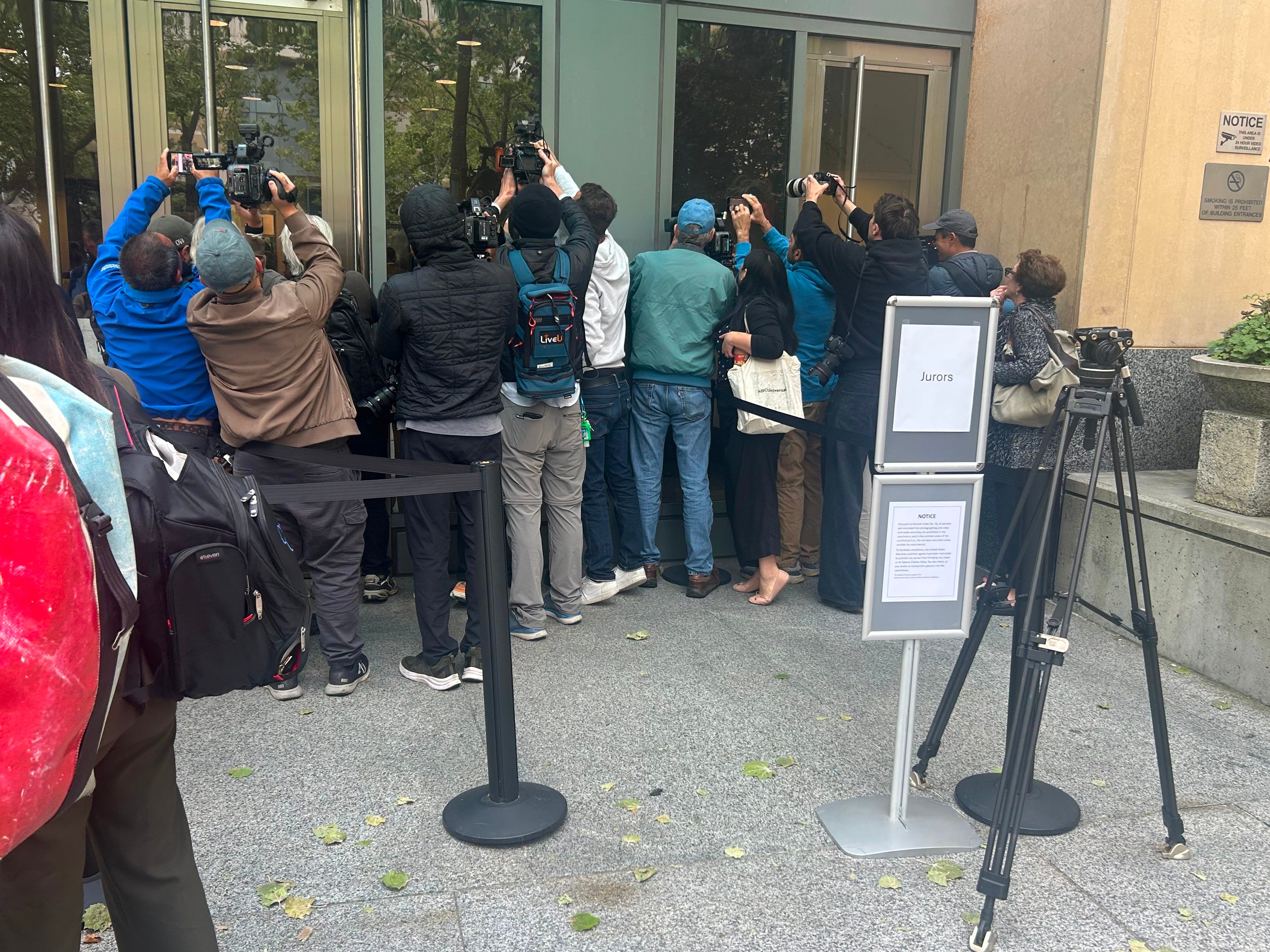
I’d also probably pay attention to how Musk’s responses were being received by the rest of the courtroom. I’ve been ruminating on that aspect over the last few days. Yes, the courthouse was a circus; yes, the Elon stans made their presence known. But I imagine if this trial took place in 2019, Musk would’ve collected a much more impressive army of fanboys pumping their fists at his genius rebuttals. Instead, the stans were just sparse enough to stick out. Their weirdo behavior, and the judge’s impatience with Musk’s attorneys, were impossible to miss.
Musk can absolutely whine his way into a landmark lawsuit that has to be taken somewhat seriously. He can ask for damages that would essentially destroy OpenAI’s for-profit aims, and send the AI industry into a premature crisis. He’s undoubtedly one of the most powerful people to ever exist. But in this Oakland courtroom, Musk is running up against the few remaining limits to his otherwise-limitless authority: he’s unsympathetic, unconvincing, and unreliable.
Gonzalez Rogers noted that jurors can have “integrity for the judicial process” even if they don’t personally like Musk; she’s absolutely right about that. I just think that if the jury is going to internalize anything about a complicated case, it will be Musk’s antics on the stand, and the numerous exhibits demonstrating his simmering anger at OpenAI, an organization he seems hell-bent on chopping down. So while it pains me to assert that one side is going to come across as “better” than the other, I do believe Musk v. Altman will ultimately be determined by courtroom approval ratings. Which means Musk is not going to win.
What to Expect This Week
On Monday, we’ll hear from Stuart Russell, who’s Musk’s “expert witness” on AI safety. Russell is a UC Berkeley professor who believes that the potential development of artificial general intelligence (AGI) could destroy human civilization. He’s not supposed to talk about how AI might kill us all. I am skeptical that he will steer clear of his existential concerns.
Brockman is also slated to testify on Monday. He’s a very important witness who’s seen it all. In the late 2010s, he journaled about how he wanted to be a billionaire someday. Musk’s attorneys are guaranteed to bring up those journal entries during cross-examination, because they fly in the face of OpenAI’s original mission statement.
On Tuesday, it sounds like Shivon Zilis might take the stand. Zilis has four children with Musk, and was on OpenAI’s board until 2023, roughly five years after Musk departed. Emails and texts between her and Musk show that she was providing her quasi-partner with sneaky updates about how things were going internally. Presumably, Musk’s attorneys will tee her up to talk smack about other OpenAI board member’s greedy motives; OpenAI attorneys are going to try and establish that through Zilis, Musk was trying to meddle with OpenAI’s affairs (or at least spying).
It’s difficult to predict beyond Tuesday, but considering that Brockman is already on the docket, I wouldn’t be surprised if Altman testifies on Wednesday or Thursday. The trial is only supposed to run until mid-May, so if Altman isn’t called this week, he’ll be up early the following week.
How to Stay Up-to-Date
Because of the courtroom incursions from weirdos, Gonzalez Rogers is adding an audio-only stream of Musk v. Altman beginning on Monday. Court is generally in session from 8 a.m. until 2 p.m. Pacific Time, so if you want to listen in, that’s the time to do it.
My word of caution is that you are not supposed to record the proceedings, even if you are sitting on the couch listening in from an entirely different state. I don’t understand how the court is planning on stopping people from uploading audio clips if/when Brockman or Altman says something stupid during their cross-examination. There’s no universe in which their slip-ups are not swiftly posted on X, the everything app. My prediction is that the audio-only stream will be revoked at some point this week, but I hope I am wrong. I’m back in New York, but am planning on following along as much as I can.
For updates from within the courthouse, I recommend The Verge’s Elizabeth Lopatto, The Washington Post’s Gerrit De Vynck, and The Ringer’s Katie Baker. There are at least a dozen other very talented reporters who are sticking around, too. I’m only highlighting a few whose coverage I came back to when I was doing my own write-ups.
I leave you all with a silly, untethered tidbit that I spotted on an exhibit from last week. It’s an email exchange between Birchall and the property manager of the San Francisco building that eventually housed OpenAI. The property manager had mentioned that the tenant must pay for all insurance, including earthquake insurance. Birchall flagged this as an issue: “In general,” Birchall wrote, “Elon hates insurance.”
Wow, it used to be that journalism meant you reported the facts.
Where you stand on this is clear.