


Concern about AI in the Bay looks different than it does here. The impacts of it are still mostly hypothetical.
In places like Wisconsin Rapids, they’re real and urgent.
Jasmine Sun has done some absolutely incredible reporting on data center backlash in Michigan and Wisconsin this summer. I followed the story less as a San Francisco-based tech reporter than as someone who has lived in both of those states, and loves the Great Lakes region deeply. As Sun points out, though Wisconsin isn’t one of the top states where data centers are appearing, it is an urgent problem here. And its culture, history, and status as a swing state make it a unique backdrop for a fight that’s only gaining prevalence nationally.
I grew up spending summers with family in Wisconsin; they’ve lived there for five generations. The beauty of this state inspired the birth of the environmentalist movement and Earth Day, and it’s where John Muir himself fell in love with nature. Sun’s description of it as Eden is earned.
I can’t claim to be from here, as much as I’d like to, but I do truly love this place. That’s why I wanted to know more about what this issue looks like in Wisconsin. I live in San Francisco now, where AI and the companies unleashing it seem to be conquering any aspect of culture they can reach as quickly as they can.
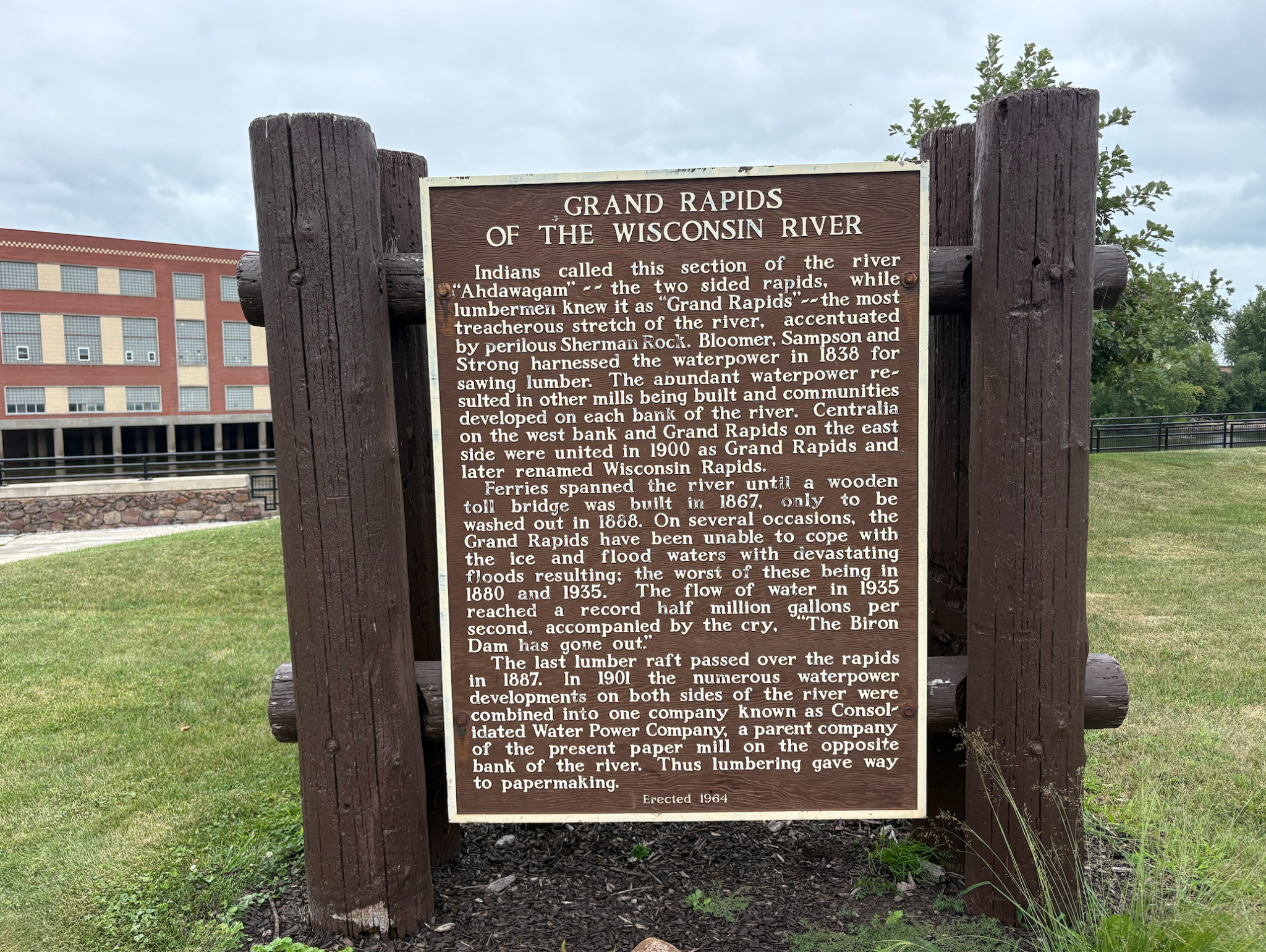
Wisconsin Rapids is a small city with about 18,000 people in the center of the state. Its history as an industrial hub predates Wisconsin’s statehood. The city straddles the Wisconsin River, where the state’s largest paper mill operated on its banks for over a century. The mill was the city’s main industry and employer until it closed in 2020. It was a devastating blow.
Now, the city is considering a proposal from the Russian-founded PNK Group to turn the closed mill into an AI data center. Residents are fighting hard to stop it before it can start.
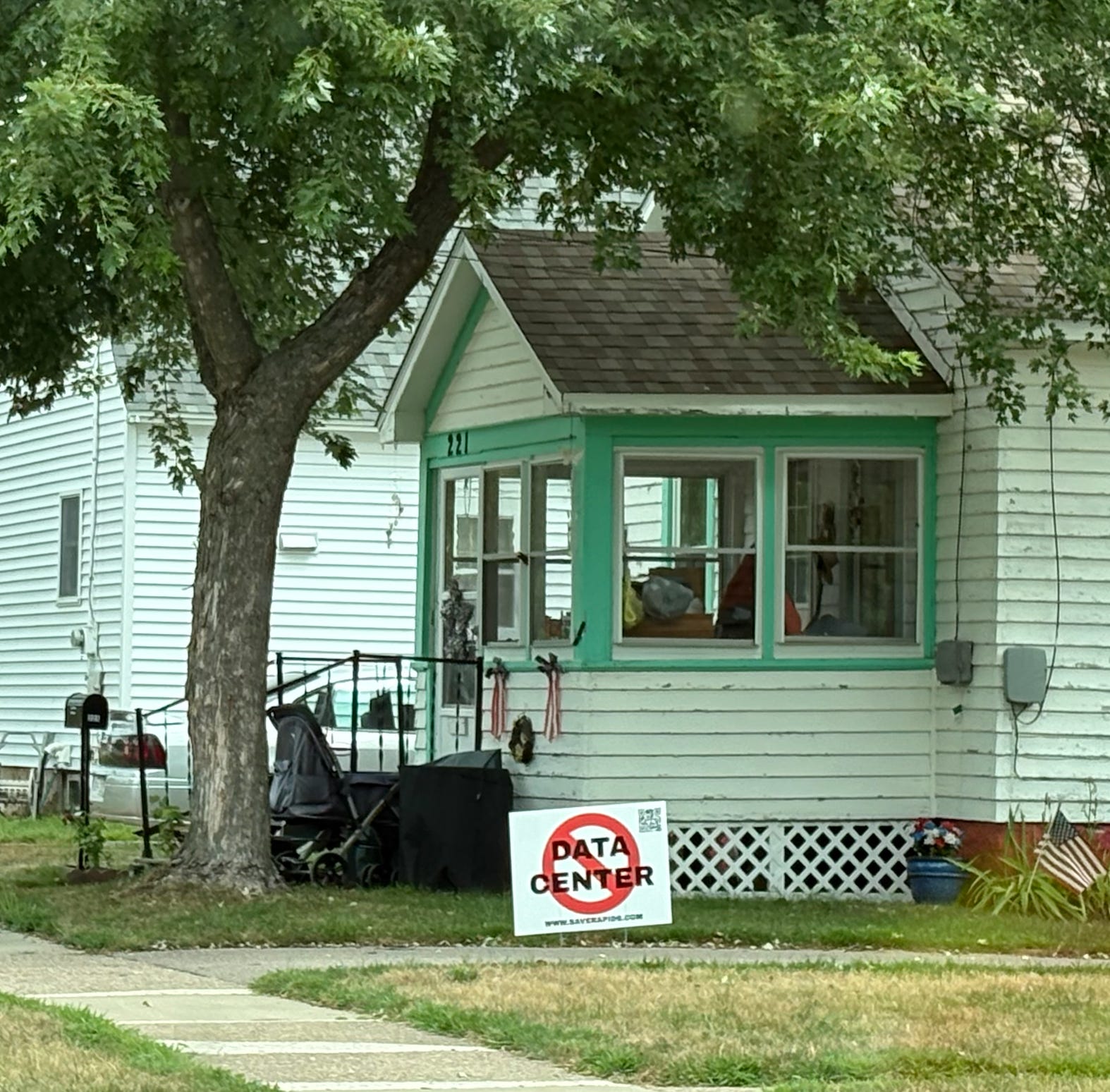
On Sunday, I met three members of South Wood County Neighbors for Responsible Development for coffee in Wisconsin Rapids. I couldn’t drive more than a block through town without seeing a Stop the Data Center sign.
The three women I spoke with are not career activists. They each work full time. Kaitlyn Federwitz is a mom of two and the owner of a vintage shop. Emily Oetzman is originally from Lodi, in southern Wisconsin, and moved to Rapids for work. Danielle McDonald was born and raised in Rapids, and her family history here is the stuff of legend: her great-grandfather was the first mayor.
The first thing I asked about were the signs I’d seen driving in.
Conversation edited for length and clarity.
Kaitlyn: This gets into a whole story. So, there was a bar over, when you come into town, that was willing to distribute our signs for us. And we had a couple events there. People could come buy signs, and T-shirts, all the stuff.
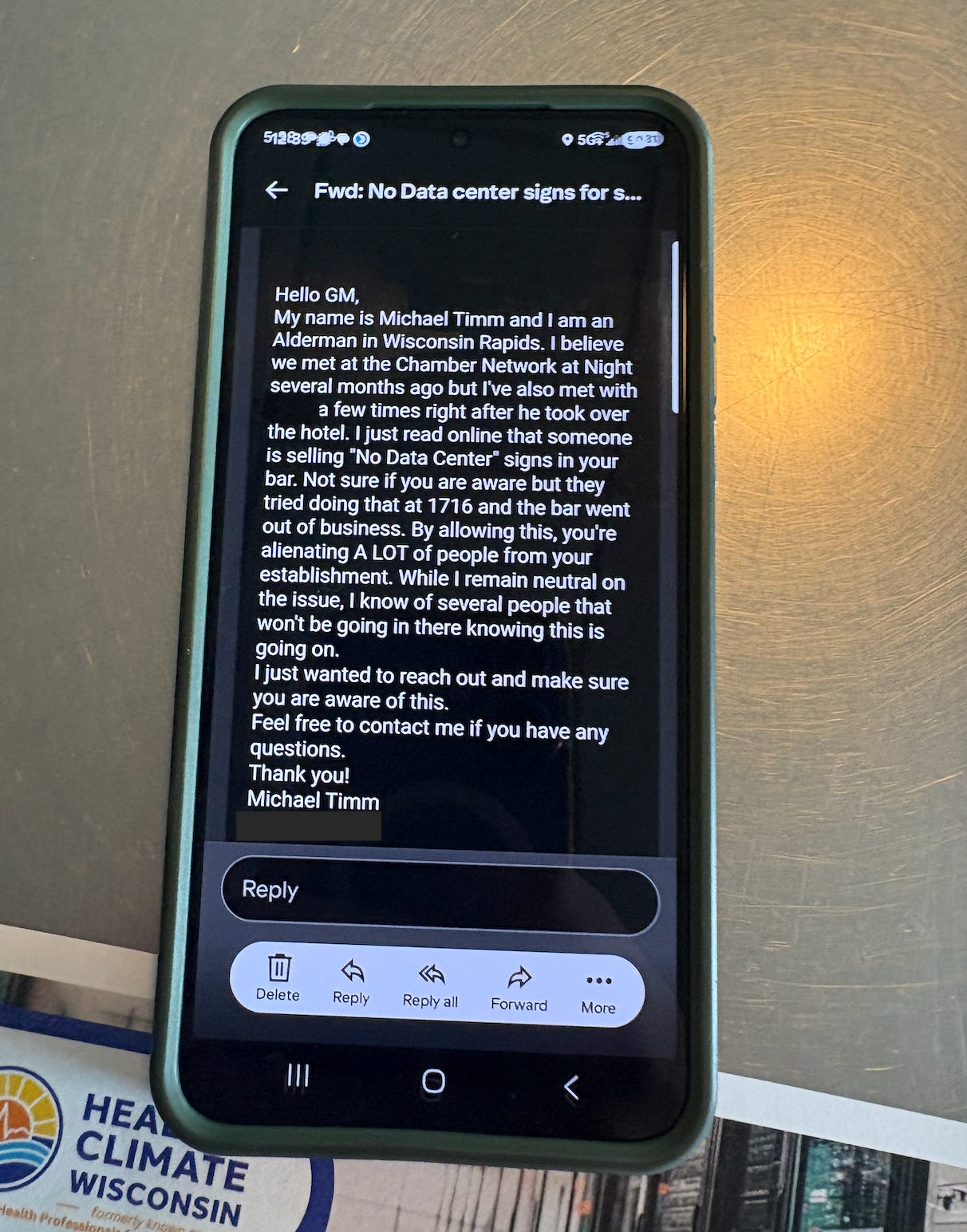
Well, for completely personal reasons, [the owners] decided to close the bar. So we were then without a distributor and a place to set up. We started distributing signs at the Hotel Mead here, at their bar. The manager down there in the bar was like, yeah, we can, we’d tell people you can go pick up a sign here. It was easier than us delivering.
One of the Aldermen in town sent a threatening email to the Hotel Mead saying, ‘you shouldn’t be distributing their signs. 1716—that’s the [first] bar—they closed. And they closed because they were associated with this group. I just care for you as an Alderman and as a member of the Chamber of Commerce.’
She smiled.
Kaitlyn: So we’re recalling him. We filed the recall papers last Monday.
I asked if they’d been in contact with other groups of Wisconsin residents fighting data center development in their communities; cities on the southeastern lakeshore, like Port Washington and Kenosha, have had more media coverage of their opposition. A coalition called Great Lakes Neighbors United — who I’ll get to meet with tomorrow — has been doing great work in that region.
The Rapids coalition told me they had been in contact with GLNU, but came to understand that organizing in a place like Rapids has a different context than in the greater Milwaukee region.
Kaitlyn: We have had a few people who’ve offered to advise us, and I feel like we’ve kind of pursued it. But also, what we have going on here is a little different, because we’re not on farmland. It’s zoned industrial. The process that our city goes through, legally, feels different. A lot of other areas have the opportunity to change their zoning, all those kinds of things. Those avenues are not available to us.
Emily: Even if we change the ordinance, it has to be changed in such a specific way for us to prevent a data center from being there. But [the planning commission] voted to explore a moratorium at the last planning commission meeting after quite a bit of public pressure at the meeting.
Kaitlyn: You know what’s interesting, they were only supposed to discuss— I was waiting for that to be brought up. They were not supposed to vote on that day. The way it was written in the agenda was ‘discussion only.’
Emily: And then someone said that, at the mic. They’re like, ‘hey, our discussion is over. That’s what was on the agenda.’ And everyone in the crowd booed, and was like, ‘Just vote on it right now. Vote on it right now.’ The crowd went crazy until they sat up there and voted on it.
Public meetings and forums in Rapids lately have been packed and tense. One meeting was cancelled last minute because so many residents showed up, they were in violation of the building’s fire code. There are protests outside, screaming matches inside, and at least from those willing to speak, a united front against the data center.
Kaitlyn: [The most recent meeting] did get tense. It got tense to the point of making me uncomfortable, because there were people who started shouting. Other than tense, I struggle to describe it. I almost thought someone was gonna have to stand up and say, ‘calm down. We can’t have a coup.’
Sometimes people associate anyone who’s anti-data-center with us, like we’re telling them what to say. We’re not—we’re a group of, like, four or five organizers.
Danielle: We can’t control what other people are gonna do. I just saw a comment on Facebook recently that we’re up in arms about things. That’s not what we’re trying to do. We’re not trying to get people up in arms. We’re trying to get people informed, and we’re trying to get them the information that they need. You know, because most people are saying, ‘I don’t know anything about a data center. I don’t know about this.’ So we’re giving them the information, because our leaders aren’t doing it.
The deliberate lack of answers, information, and transparency from their city government is a consistent frustration to them, and a throughline among Wisconsin organizers through each city’s different circumstances. Rapids’s government can’t even give them a straight answer on whether an NDA exists. They’ve said on their website no NDA has been signed, but wouldn’t give a yes or no answer at a planning meeting.
One of the objectives of the organizing in Rapids is to make the unanswered questions obvious, and give available information to the community.
Kaitlyn: Yesterday, we walked in a parade, just a small parade outside of town here. And we had flyers, half-page sheets that we were handing out. And I was saying, here’s a page of info because we’re willing to inform you. Because the city’s not. They’re not.
Emily: Also, people are allowed to take our information and say, ‘I don’t agree. I want it to be built.’ That’s fine. They’re allowed to look at all of our information and make that decision for themselves. I will say, nobody showed up to the planning commission meeting to say they wanted it. Everybody who spoke didn’t want it. Everyone said, ‘I don’t want it,’ or, ‘I have huge concerns about the way the city has been handling it, so that makes me not want it to come to town, because I feel like you’re hiding something about it.’ Those kinds of things. People asked, rightfully, about the moral character of Eric Adams. He has federal indictments for bribery and he wants to be financially involved in a project here. I think that’s a bad idea.
Disgraced former New York City mayor Eric Adams showed up at a Wisconsin Rapids town hall earlier this month to advocate for the data center. His reception was not warm. He reportedly said to the crowd, “Like it or not folks, data centers are going to be here,” to which a resident in attendance yelled, “Put it in your backyard!”
Kaitlyn: I know people who have come to the conclusion that they are against this project because of how the city has handled it. Especially once the whole Eric Adams thing happened, and when it comes out that these are Russian billionaires who are owning this — there are citizens looking at that and saying, ‘I’m really not anti-AI or anti-data-center, but this is really not the right project.’
Emily: I would really love to know how many gallons of city water they’re going to be using, so I know how much my bill is going to go up when it happens.
Kaitlyn: They want clean water for that closed loop system. How are they going to get clean water other than drawing from the city? That site is so heavily contaminated from being a paper mill that they’re not supposed to touch that land. You can’t dig at that site. And if you do put tanks in the ground, they’re next to the Wisconsin River. What happens when they get a leak? There’s so many unanswered questions.
Emily: They won’t tell us what chemicals will be used in the close loop system. That’s an industry secret. They are adamant that it will be closed loop, And because of that, there will be no contamination. In Wyoming, a Meta data center using a closed loop system put antibacterial resistant bacteria into the city water supply. Because before you start the closed loop system, you have to– it’s called a fill and flush. And when they flushed it, all of the bacteria built up in those pipes went straight to the city water supply.
Danielle: They won’t tell us how often they’re gonna flush that system. They really haven’t answered a single question.
One way the city has tried to compromise with residents is proposing a Community Benefit Agreement. Residents are highly skeptical that the city would be willing or able to enforce one — especially if PNK signs it, but leases the center to a different tenant. Even if the tenant was legally bound to the agreement, and the city properly enforced it, would punishment in the form of fines even matter?
Emily: In my mind, a bunch of billionaires who aren’t from here would rather pay a $10,000 fine every day for the rest of their life than actually adhere to the code or the ordinance, because they have the money to do that. So why would they follow it if they can just pay what is really a slap on the wrist fine for them for the rest of time?
Danielle: I live about a mile downwind from the dog food plant, and they have the same thing. They have scrubbers for the smell and everything. Some days I can’t even be outside because it smells like rotten garbage in the sunshine. It is the most awful, awful smell. And I have complained for years about it. They’ve fixed it and there’s fines. Well, they pay their thousands of dollars of fines, and it still stinks to high heaven for three days in a row.
So I’ve got that on this side of me, and now, less than a mile on this side I’m gonna have whatever’s coming out of [a data center]. How are you going to enforce it? And if the city gets them to pay a fine, they’re going to pay the city. They’re not paying me. You know, the city’s going to get that money. I don’t know, in a sense, getting paid for screwing up my life.
This is where you naturally start to wonder what the pros of this proposal even are; at least, what the city and PNK are trying to claim they are. Hypothetical tax benefits are the reason Wisconsin’s Republican-controlled state legislature and Democratic Governor both okayed a massive sales tax exemption three years ago to lure data centers to the state in the first place.
An actively functioning data center wouldn’t come close to replacing the hundreds of jobs the mill provided; residents know whatever big tech company moves in likely won’t hire locally much. They found out during one recent public forum that even temporary construction jobs to build the data center wouldn’t be hired in Wisconsin Rapids, either.
Danielle: At the meeting at the library, they said that they were going to build it off-site and bring it in. So it’s going to be a modular building anyway, kind of like a Lego situation.
Kaitlyn: They want to have a bunch of it pre-built and they’ll just slap it together on the land.
The loss of the mill was economically devastating for Rapids, but it also meant the end of over a century of pollution on its site. They shared with me that they’d lost loved ones to illnesses believed to be related to the mill’s pollution. Public and private officials can’t or won’t give residents answers about whether their safety would be at risk. They can’t tell them if the center would bring local jobs, or how many.
Emily: Let’s enter a hypothetical: The data center will not do any kind of pollution. It will do nothing bad. It will increase the tax break or the tax base or whatever the hell. But. because it uses a lot of power, your electricity or water or whatever bills are going to go up. There’s nothing you can do about it. Everybody’s bills are going to go up. No other harmful environmental impacts. Whatever, whatever. We’re in a hypothetical.
There are people. 40% of the people who live in Wood county are in the ALICE population. That extra $20, $30, $40 a month is the difference between them having fresh fruits and vegetables or not. It’s the difference between the lights being on or the kids having WiFi to do schoolwork. That $30, $40, $50 is a lot of money to people around here.
I also struggle with that. If the economy is already struggling and 40% of people around here are employed and still living paycheck to paycheck, that extra $50 of the energy bill every month is massive.
Danielle: And people will say, ‘Oh, Rapids runs everything out. Rapids doesn’t want anything but the mill.’ We go by South Wood County Neighbors for Responsible Development. Not because we don’t want development, but because we don’t want damaging, extremely detrimental, irresponsible development.
Kaitlyn: There’s nothing with a data center coming that doesn’t look bleak as hell.
The sentiment among Rapids residents is seemingly unanimous. I asked if anyone in city government has taken a public stance against the data center. They said no, not publicly.
Kaitlyn: Because they don’t want to get sued.
Danielle: For having a bias. If PNK isn’t able to build here because of anything, they can take whatever words that any Alderman or anybody has used.
Kaitlyn: ‘You had a bias against us, and that’s why you didn’t approve our conditional use permit.’
Does PNK, or any billion-dollar company, get to bully their way into Wisconsin Rapids, public sentiment, safety, and environmental impact aside? And with environmental impact: where is the Department of Natural Resources?
Answer: Former Governor Scott Walker’s administration slashed their budget. Wisconsin, birthplace of 20th century environmentalism, has faced some of the nation’s most vicious cuts to its environmental agencies in the last fifteen years.
Kaitlyn: The DNR does not have a very strong public statement on data centers. In the beginning I called the DNR and I said, ‘Could you make a statement on this?’ The local DNR guy called me back and said, ‘I will email you our fact sheet.’ And that was basically it. The DNR frustrated me in the beginning a lot. And I haven’t gone down that path more, because I was like, I can not deal with you if you’re just going to waste my time.
Wisconsin Rapids is a red city in a red county. They’re on the same side of the data center issue as the Party for Socialism and Liberation. The ideological pluralism behind this issue hasn’t seemed possible in a long time in Wisconsin.
As a member of the Milwaukee PSL I’ve spoken with put it: “Data centers and Flock cameras. They’ve brought everyone together.”
Kaitlyn: This has crossed political lines extremely.
Danielle: It’s mended fences even in my family.
Emily: I have been really surprised about how it’s crossed party lines in Wood County. The demographic of people that showed up at the first planning commission meeting very much surprised me. And I think this data center conversation is a great way to start mending some of those relationships. We do agree on things. We might not agree on how to get there, but this is where we can start.
Kaitlyn: This is all from my opinion, where the city is coming from. This is all about tax revenue, and this is all about this potential tax revenue. Because they lost the mill. I don’t know how much debt we as a city carry now, but we do not have the tax base to do the things we need to do to maintain this city.
Which I understand. But you don’t bring in someone who says you may get a billion dollars in tax revenue. We’re just speaking in hypotheticals constantly.
The fight to bring data centers into Wisconsin makes my chest hurt. The fight to keep them out, the more I learn about it, gives me hope in more ways than one. It’s reinvigorating local democratic participation in Wisconsin, and overruling partisan lines.
The organizers feel that optimism too — even through being called terrorists and anonymous threats online. One had security cameras installed recently because of backlash. I asked if she feels safe. She shrugged, and said, “These are Russian billionaires we’re talking about here.”
Emily: We’re happy to volunteer our time for this, because we care about the community and don’t want it. But every time we learn something, it gets even further entangled with a different city and a different person and different company.
Kaitlyn: I personally have optimism in the discussions that I’ve had with the lawyers. There is plenty of fight left to be fought. This is absolutely not a done deal.
Emily: And nobody is safe from a recall at the moment. I think they all realize that based on the vibe in that crowd, none of them are safe from community action.
Three final questions, for now. First, has anything in recent memory brought Rapids residents together like this?
Danielle: I’m thinking over my history. Some of the things that, you know, made people up in arms. Back when we had monkeys at the zoo, there was a lady who activated a bunch of people. She thought it was very inhumane. We never had monkeys at the zoo again. So that was the last major controversy.
Objectively excellent and unexpectedly fun answer.
Second: What do you need from the state of Wisconsin?
Emily: I need [Gov.] Tony Evers to reverse his tax incentive for data centers to come to town. His signing that was detrimental to Wisconsin in my opinion. I’m really bummed that the gubernatorial candidates, neither of them are interested in a moratorium or a pause on data centers to learn more about them. That’s a really big bummer to me. I wish there was a candidate, either side of the aisle, who was at least talking about it.
Kaitlyn: I’ve basically given up on the higher government. The mayor gave an interview where he kind of blames the state for not doing anything.
Finally: Who do you feel is listening?
Emily: That’s a good question. I think there are residents listening to us. They might not take everything we say immediately. They might read it and then do some more research, whatever way that sways them. But I think there are people who are appreciative that we are doing something, and they are willing to read our posts or listen to what we say or say.
Kaitlyn: I think other cities are watching us. I know Stevens Point is watching us. I would think that Marshfield is watching us. I think that we are going to be the example for the cities in this area.
Emily: I mean, people in New York are watching us. Eric Adams came to town and now we’re on the news in New York.
Someone in San Francisco once dryly called my Wisconsin ID “exotic.” I thought about that as I drove home. They were joking, obviously, but there’s an uncomfortable truth at the heart of it. What are places like this to places like that?
Someone yelled at Eric Adams to build a data center in his backyard, if they’re so necessary. Those who stand to profit from data centers will continue to lobby for their imposing, destructive existence anywhere that they don’t personally have to experience.
Wisconsin Rapids isn’t the first or the last town to be reduced from a community and culture to land for big tech to put things they don’t want to see. And they aren’t the first or last to take that control back.
–
Other things I’ve paid attention to this week:
Jason Kelce in this eccentric musical number asking people to send jars of pee to data centers:

