


The January jobs report dropped this week, and surprised even the Trump administration with numbers that looked decent on the surface—143,000 new jobs, unemployment holding at 4.3%. But scratch beneath the topline figures and you’ll find an AI-shaped hole in the American labor market, and signs that our traditional techniques aren’t properly measuring it.
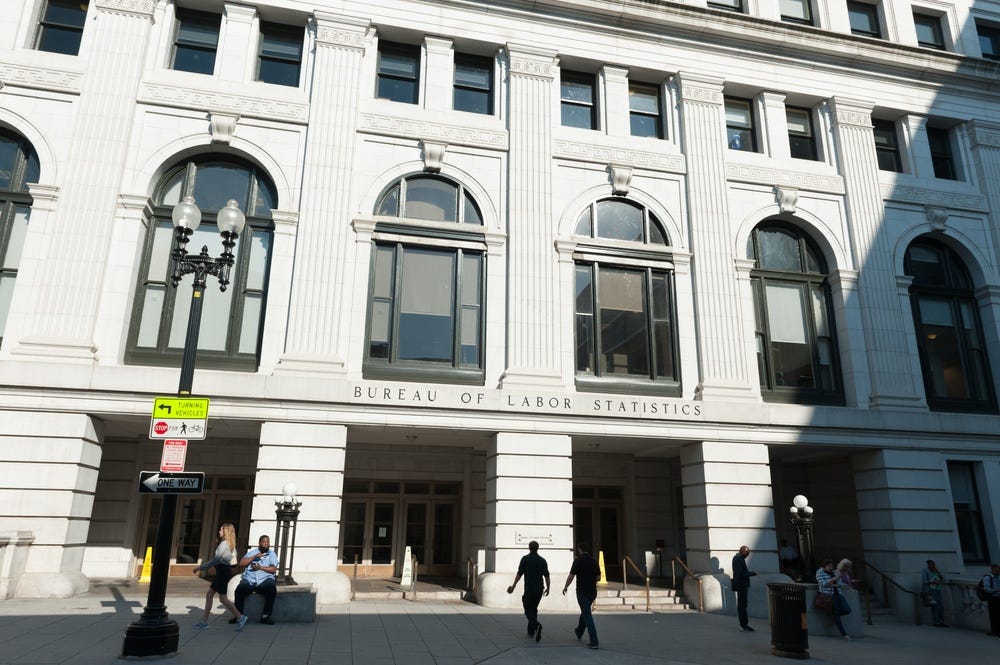
There are several caveats to attach to the report: it comes at a time when the Trump administration’s political meddling has cast doubt on the Bureau of Labor Statistics’ objectivity, and because in 11 of 12 months of 2025 the numbers were eventually revised downward, this report’s numbers, too, will probably slip in future.
But even taking these numbers at face value, they obscure a couple of important warning signs. The first is which jobs grew, because they fell into only three categories: healthcare added 82,000 jobs in January, with social assistance adding another 42,000, and construction picking up 33,000. Strip those out and you’re staring at an economy that’s barely hiring at all. As ADP’s chief economist, Nela Richardson, told reporters last week, the American economy has “narrowed the pathway to job creation to one or two sectors,” such that we’re essentially one big healthcare facility, and the other jobs are falling away.
Employers announced 108,435 layoffs in January—the highest January total since the Great Recession in 2009, a 205% jump from December. Amazon and UPS led the carnage with roughly 46,000 cuts between them.
That has experts raising their eyebrows at this week’s strangely positive jobs report. After all, none of them saw these numbers coming. The US Federal Reserve’s beige book, based on research in the Fed’s 12 districts, reported that in January “employment was mostly unchanged.” And private-sector reports on the job market reported that the economy lost jobs in January, it didn’t add them.
“I wouldn’t exhale with today’s job numbers. The job market remains fragile and highly vulnerable,” Mark Zandi, chief economist at Moody’s Analytics, wrote in a dispiriting post on X this morning. Which brings us to the second warning sign when it comes to jobs: AI’s hypnotic power to convince corporations that they don’t need as many humans. As Zandi continued in his note, “this is before artificial intelligence has meaningfully impacted productivity growth and thus jobs, which feels dead ahead. So, soak in the January job gains, I suspect there won’t be many more months with job gains like this in 2026.”
Some companies are openly blaming (or in fact crediting) AI for their downsizing. Pinterest cited AI explicitly when cutting 15% of its workforce, saying it needed to “hire AI-proficient talent.” Dow Chemical, headquartered in Michigan and one of Houston’s largest employers, pointed to automation and AI in eliminating 4,500 jobs. According to Challenger, Gray & Christmas, companies directly pointed to AI in 55,000 job cuts during 2025—more than twelve times the number just two years earlier.
But here’s the twist: a Harvard Business Review survey found that 60% of organizations have reduced headcount “in anticipation of AI’s future impact”—not because AI is actually doing those jobs yet. Only 2% of companies said they made large layoffs tied to actual AI implementation.
As a result, we’re canning people for what AI might do tomorrow, not what it’s doing today. The term for this, of course, is “AI-washing“: companies attributing financially-motivated cuts to a future that hasn’t arrived, dressing up cost-cutting in the language of innovation. And it spells bad news for workers, because it shows that companies aren’t embarrassed to say that they’re able to replace workers with AI, because shareholders love it. And it shows that companies are willing to make these cuts long before AI can even do the work.
Michigan workers are living this contradiction. Dow and Acrisure have both announced layoffs connected to AI systems, particularly in back-office functions. But as one Michigan official put it, jobs aren’t disappearing through clean replacement—they’re disappearing because executives believe they need fewer humans once automation is “embedded into daily workflows.”
Some states aren’t waiting around to see how this plays out. California’s expanded WARN Act now requires employers conducting mass layoffs to disclose whether they’re coordinating retraining services and provide information about food assistance programs. Illinois’s new AI employment law, which took effect January 1, requires employers to disclose their use of automated decision tools and maintain detailed records. California also passed protections allowing app-based drivers to unionize while remaining independent contractors—one answer to the gig-ification that often runs parallel to automation.
These are small moves, but they point to a larger truth: the bargain between workers and employers is rapidly shifting, so much so that traditional unemployment statistics can’t capture what’s happening: companies are cutting headcount based on AI’s potential rather than its performance.
This is a labor market that economists call “no-hire, no-fire.” Only 43% of employed Americans plan to look for a new job in 2026, down from 93% in 2025. When even healthcare—literally the only sector reliably adding jobs—accounts for more than half the monthly job growth (and after a year in which newly revised numbers showed basically no jobs were added at all), something fundamental has broken.
Wherever the jobs numbers land after they’re revised, it’s clear that except for a couple of industries, the private sector is being restructured around what AI might eventually make possible, and corporate tolerance for the reputational risk of AI-related layoffs is growing. And so here we are: 108,000 layoffs in a single month, healthcare propping up the whole jobs picture, and an AI-shaped hole that our measurement tools can’t quite see yet, but is coming into focus.