


The 2026 World Cup, concluding this Sunday, has been unique among its nearly 100-year history. Not solely because the Scots managed to outdrink Boston. This year’s tournament is the first to resolutely join the AI era.
At a quarterfinals watch party hosted by and for tech workers (at the immigration law firm Alma in downtown San Francisco), while chatting about AI over pizza, beer, and Norway vs. England, the recurring ‘Powered by Lenovo AI’ lower third caught my attention. I asked the group of engineers I was talking with if they knew what Lenovo AI was, or why it was the ‘Official Technology Partner.’ There were shrugs and mild interest. Obviously AI is involved in the World Cup; it’s 2026.
When I looked into it later, I found grandiose advertising for FIFA AI Pro, a specialized model developed with Lenovo. It’s touted by FIFA as the first of its kind technology, promising democratization of access to the most complete set of analytics and data available.
The Miami FIFA offices, more or less the command center for the 2026 Cup, was reportedly set up as an AI command center. The journalist FIFA allowed inside on a short leash described the presence of Lenovo’s AI as prominent, and the nature of its implementation as unclear. A Lenovo representative told him the agent allowed FIFA to cut down on necessary data analysis staffers three times over.
FIFA made the agent available for free to all 48 participating teams, and posit equity as an upside: one of the abilities of the system, hypothetically, would be the coaching staff of a smaller team, like Cape Verde, entering intricate questions in plain language about powerhouses like Argentina, and generating charts, 3D visuals, and historical context and game tape.
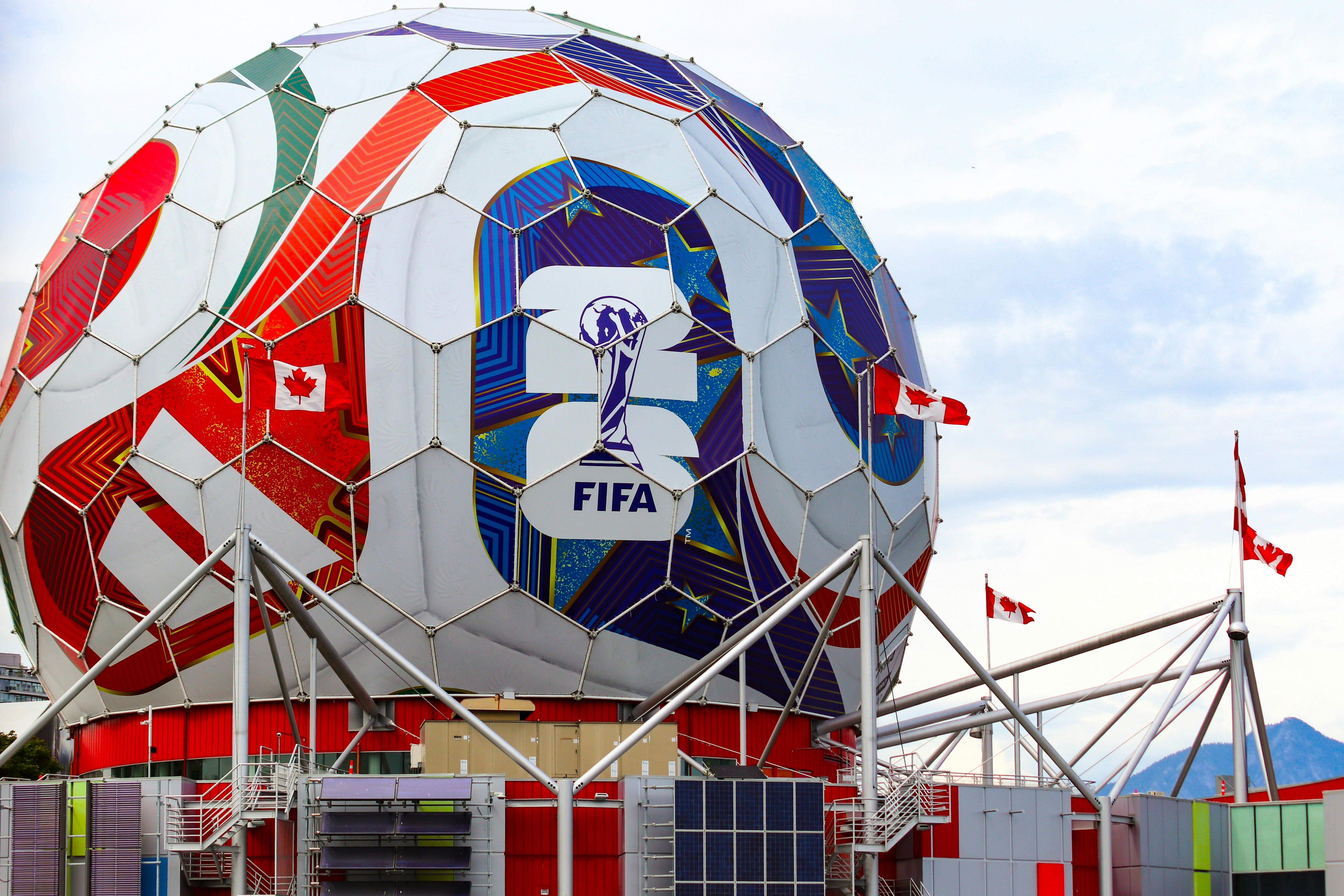
Tech is deeply embedded in this World Cup — the ball itself has sensors detecting touch, movement, and position. Every eligible player underwent a full-body scan to create a digital avatar “accurate to within millimeters.” The avatars have been used throughout the tournament in stadium replays, global broadcasts, and “semi-automated” refereeing decisions. Video Assistant Referees (VARs) have been used throughout the month to double check nearly every call by the refs on the field. It’s been used to overturn goals that likely would have stood a decade or two ago. AI has even been used to protect players from online abuse. 30,000 keywords, if left on social media platforms of teams and players, trigger instant hiding of the comment and investigation by FIFA, who says online abuse can result in bans from purchasing FIFA tickets and attending matches. (Side note: the anti-abuse AI works on Facebook, Instagram, Youtube, Tiktok, and Threads — but Elon’s X opted out. Didn’t need AI to predict that one.)
FIFA was incredibly proud to debut their proprietary AI, constantly framing it as a tool of equity and fairness, and said their efforts reflect a “broader change in how sports technology is packaged.” This World Cup is also a World’s Fair of AI, or at least how technological innovation now all leads back to it.
Even the watch party full of AI engineers themselves were uninterested in the technology as spectacle. The room had divided support for Norway and England and a split whiteboard of final score predictions. England’s first goal of the match may or may not have been the result of the ball hitting a camera cable overhead, which FIFA rules dictate a stop in play to correct. FIFA let the goal stand, saying the sensors inside the ball did not detect a collision with the wire. Many players on the Norwegian bench, and ESPN (human) analysts, say the ball hit the wire. FIFA sided with their AI system over human eyes. Norway was eliminated.

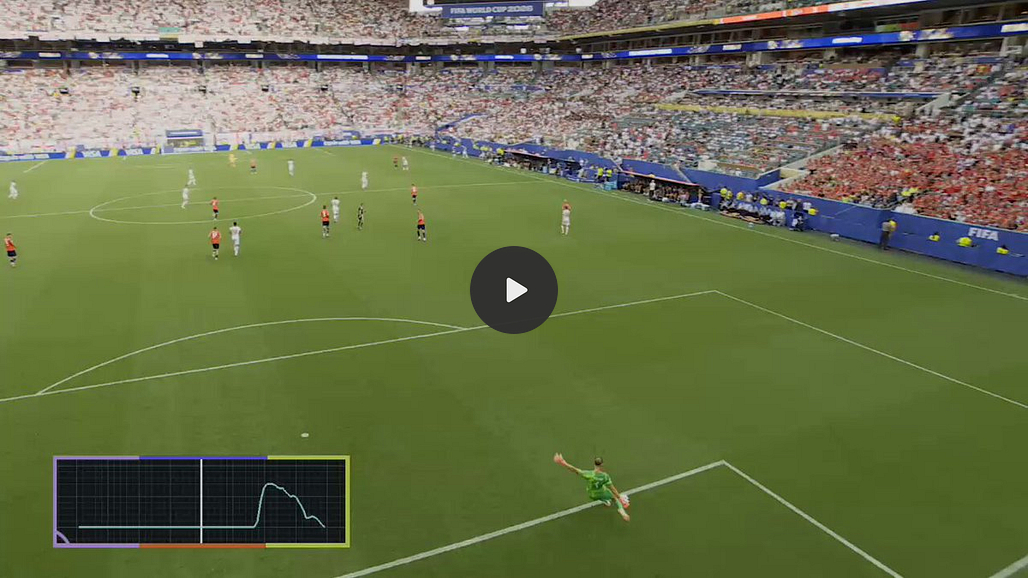
Norway’s manager Ståle Solbakken later told ESPN that though he fully believes the ball hit the wire, “I can’t say anything about that because FIFA… If there’s been no sound or there has been no [reading] in the chip, what can I say against that?”
AI now seemingly runs every layer and aspect of experiencing the World Cup. It’s the ball, the referee, the assistant coach, the social media moderator, the graphics, the analysis, and (at least) every other commercial. Whether or not it has improved the game, in true reflection of the moment, AI is everywhere. Big Tech, courtesy of FIFA, has had a massive global stage to push the forced inevitability of its prominence. Letting AI run the World Cup didn’t really fix any existing problems — increasing precision of offsides calls by millimeters won’t make people suddenly trust FIFA.
The next World Cup could take AI further into every aspect of the game — or, like the 2022 “Crypto Bowl” that saw its paramount cryptocurrency sponsors in legal and financial ruin a year later, the 2026 World Cup could be the overconfident presage of a crash.
Great read, thanks JJ!
This is fascinating and makes the sport more interesting when teams like Cape Verde can utilize it to level up.