


Matthews, North Carolina, a town of about 30,000 on the outskirts of Charlotte, is in many ways a representative mix of the country politically: a suburb in a purple county, in a purple state, where about 30 percent of the residents are Republicans, 27 percent are Democrats, and everyone else is in between.
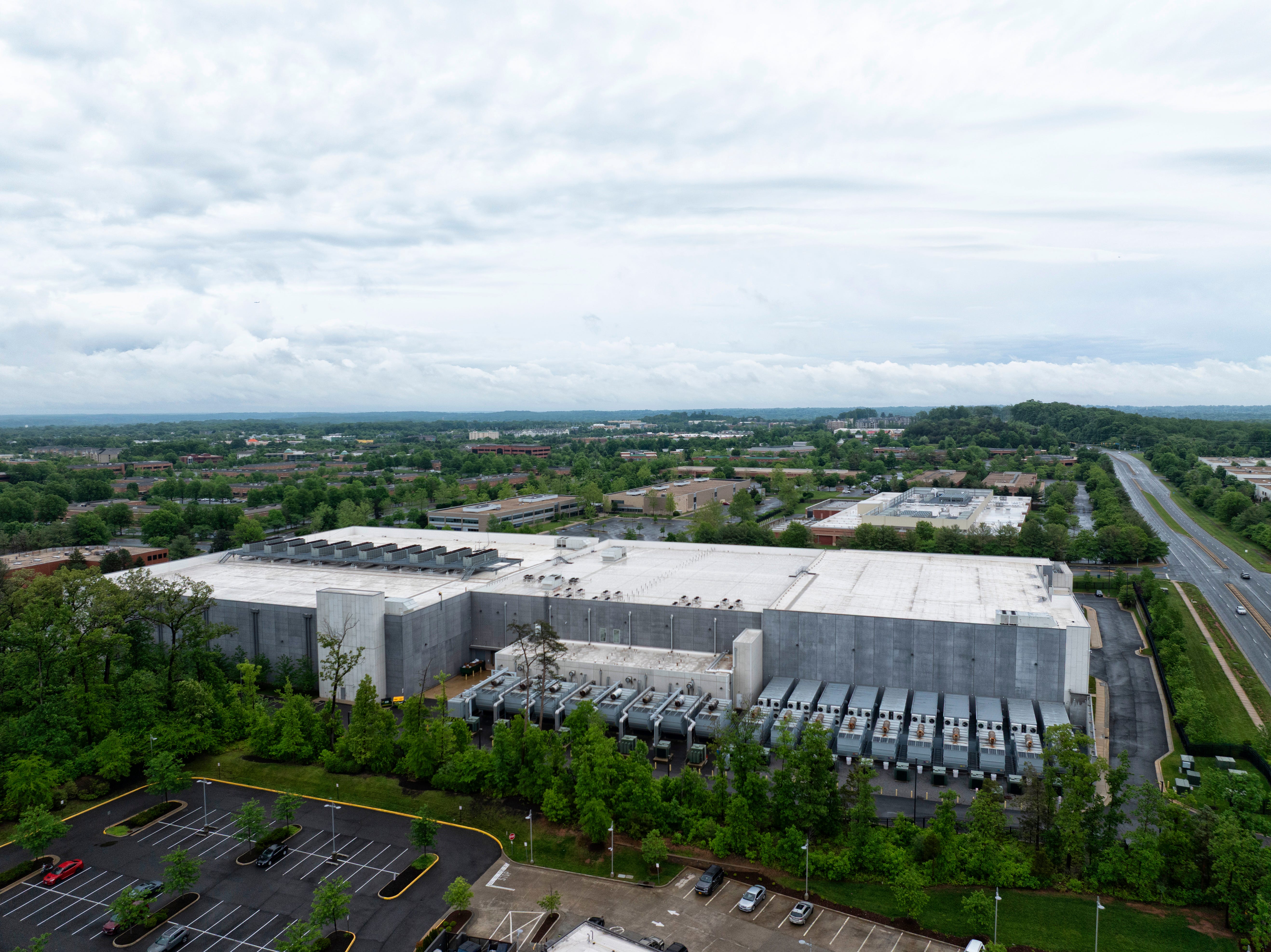
This is all to say: it’s not a hotbed of liberal activism, by any stretch. But when developers, calling themselves Project Accelerate, sought to rezone a stretch of 123 acres in order to build a giant data center — a campus composed of five two-story buildings, substations, transmission infrastructure, solar fields and generators that required up to 600 megawatts of electricity — they ran into a wall of fiery opposition.
Never mind that the project would have funded half of the city’s budget. Town meetings brimmed with righteous anger and pushback, as elected officials fielded emails, texts, phone calls and other messages in strong opposition. Mayor John Higdon, an independent, told the Associated Press that he felt like the balance was “999 to one against.”
Had the council approved it, “every person that voted for it would no longer be in office,” he said. “That’s for sure.”
So it was shot down. Across the country, data centers from Tucson to Tennessee are seeing similar levels of opposition, drawing backlash in areas not known for lefty activism. The issue is already reshaping political races, with some candidates riding anti-data center positions to victory, and raising questions about whether the issue — as well as other concerns about A.I. — will be a potent political force in the 2026 midterms and beyond as the Republican party increasingly aligns itself with tech giants at the national level.
“We know Trump wants data centers and Kevin Stitt wants data centers, but these things don’t affect [them],” Brian Ingram, a Trump voter in Sand Springs, Oklahoma, told The Washington Post. “You know, this affects us.”
The data center pushback shows how a populist revolt against the rapid growth of big tech remains an unpredictable political force — and one that is potentially wide open for the taking as the A.I.-driven economy and the complicated questions the industry raises continue to come to the fore. Concerns about data centers include: power and water usage and spiking rates, environmental issues and pollution, rezoning and land use questions about turning over farmland to industry, and the incursion of outside – and opaque — corporations into rural areas where they have had little connection previously.
Already, a handful of political candidates have emphasized their opposition to data centers as part of winning campaigns. These include Peter Hubbard, a Democrat who was elected to the Georgia Public Service Commission, which regulates the state’s electric utility, by focusing on rate hikes that have been linked to data centers.
“The number one issue was affordability,” he told Wired. “But a very close second was data centers and the concern around them just sucking up the water, the electricity, the land—and not really paying any taxes.”
Virginia governor-elect Abigail Spanberger campaigned by saying she wanted data centers to “pay their own way,” for power. And John McAuliffe, a Virginia Democrat and former Biden climate adviser, won a state legislature seat in a historically red district after a campaign that focused “almost entirely” on data centers and industrial development on farmland, according to a profile in Heatmap. For 2026, Michigan Senate hopeful Abdul El-Sayed, a Democrat, has already been emphasizing the issue.
Other communities that have pushed back against data centers include Tucson, Arizona, St. Joseph County, Indiana, suburban Atlanta, Georgia, Hermantown, Minnesota, Sioux Falls, South Dakota and Prince George County, Maryland. In some instances, opposition has been led by the Democratic Socialists of America. But the issue has also found surprising traction in red states and counties.
Heatmap released a report recently that found that less than half of Americans would support a data center near them, regardless of political affiliation.
“I’ve been doing this work for 16 years…and this by far is the biggest kind of local pushback I’ve ever seen here in Indiana,” Bryce Gustafson of the Indianapolis-based Citizens Action Coalition, told the AP.
Data Center Watch, a project from AI security company 10a Labs which measures the opposition to data centers, has seen a sharp uptick in the last year. It counted 20 proposals valued at $98 billion in 11 states between April and June that were blocked or delayed amid opposition at the state or local level — a full two-thirds of the projects it was tracking.
Momentum has been trickling upwards to Washington amid the Trump administration’s aggressive but so far failed push to prohibit state-level regulation of A.I. Senate Democrats are investigating the role data centers play in electricity prices. Bernie Sanders recently called for a moratorium on data center construction — issuing a warning about the drain on energy and water reserves as well as rising costs for everyday Americans. And advocacy groups that focus on seemingly disparate issues — from environmental groups like Food and Water Watch, to racial justice groups like the NAACP — are jumping in the fight.
“It takes up farmland in rural communities. It takes up dwindling water sources in communities that need cleaner drinking water. And it is driving up electricity prices for everyone,” Mitch Jones, managing director of policy and litigation for Food and Water Watch, told the Washington Post. “It is drawing together people from disparate backgrounds who might not agree on other political issues.”
As The Post notes:
Even Florida Gov. Ron DeSantis (R) is championing an AI “bill of rights” to enshrine local governments’ power to stop data center construction and prohibit utilities from pushing AI infrastructure costs onto residents. The break between Rep. Marjorie Taylor Greene (R-Georgia) and Trump was driven in part by her vocal criticism of his AI build-out push.
Of course, the data center buildout still continues at a rapid pace, even in the face of this opposition. Spending on data center construction in 2025 in the U.S. outpaced all of 2024 by August. Invariably, more projects means a larger number that face opposition. And the tide may yet turn the other way. But it feels notable that many local communities have been able to mount successful resistances — which can be rare, for anyone who has watched how powerful companies are often able to win local development fights through shrewd political maneuvering and sophisticated public relations campaigns.
Josh Thomas, a Virginia state delegate from Prince William County, was re-elected to a district that is close to “Data Center Alley,” — what the neighboring county calls the highest concentration of data centers in the world — after introducing multiple bills to rein in data centers in the state.
“The little guy finally won,” he told Wired about a recent project that was put on hold after legal pushback. “Which rarely happens in any industry.”
Here’s what else we’re reading:
New hiring appears to be slowing significantly
The US shed almost 1.2 million jobs through November, according to outplacement company Challenger, Gray & Christmas. That’s the highest number of job-cut announcements for that period since 2020. AI was one of the top reasons cited for reductions, with the tech blamed for tens of thousands more job cuts last year than bankruptcies were. (Bloomberg)
We interviewed Steve Grove, the CEO and Publisher of the Minnesota Star Tribune, about his efforts to rejuvenate the historic paper after a career in tech, last year. The paper has been at the center of the story about the ICE shooting and intense aftermath in Minneapolis — and is worth checking out.
The Grok / X scandal, over the programming that allows users to undress people — including apparently those who are underage — continues. I thought this sharp take from Parker Molloy, about the way mainstream media frames debates about A.I., as if the programs should take responsibility when something goes wrong, and not the companies and people who make them, was spot on.
A group of tech employees are circulating a petition that asks other tech workers to demand that ICE leave their cities.
Anil Dash has some predictions about the tech industry in 2026: I think a lot of [folks who have been laid off in tech the last few years] will be people starting their own new companies and organizations … We saw this a generation ago after the bust of the dot-com boom, when it was not only revealed that the economics of a lot of the companies didn’t work, but that so many of the people who had created the companies of that era didn’t even care about the markets or the industries that they’d entered. When the get-rich-quick folks left the scene, those of us who remained, who truly loved the web as a creative and expressive medium, found a ton of opportunity in being the little mammals amidst the sad dinosaurs trying to find funding for meteor dot com.
See you all next week.
Well said - love to see the coalition elements described here.
I believe data centers will become the focus of increasing public resentment and potentially violence. You can already see the pattern emerging. Across municipalities, people are agitated about water and power being diverted toward these facilities. They ask a fair question: why should the needs of data centers outweigh the needs of communities?
It’s easy to see how the data center becomes a symbol of broader dysfunction. When people feel ignored, when the essentials of life are rationed, they look for something to blame. A massive structure, owned by distant billionaires and filled with silent machines drinking power and water 24/7, makes for an easy villain. We need to forge a new future. Check out my three part series.
Reclaiming the Future
Three Essays on Technology, Power, Human Agency and the Work Ahead
https://kennetheharrell.substack.com/p/reclaiming-the-future