

I checked out the premiere of Bao Nguyen’s new documentary “Code For The People” last night, hosted by KQED, San Francisco’s NPR member station. The screening follows last week’s New York premiere and panel moderated by Variety.
The film itself is less than half an hour, and was funded by Automattic, the parent company of Tumblr and WordPress, and directed by Bao Nguyen, known for feature documentaries about icons of culture like Saturday Night Live, BTS, and Bruce Lee (producers called his filmography a “throughline” with open source code in terms of cultural impact).
It urges the public to rally behind open-source code as principle, and refers to itself as a “Manifesto for the open web.” Its main human subject is Automattic CEO and founder Matt Mullenweg, present at the screening.
Mullenweg describes widespread platform decay, eloquently referred to as “enshittification,” as a cycle internet users are probably already accustomed to: a platform that initially offers free services evolving to restrict free features behind a paywall, flooding the platform with AI slop, and prioritizing corporate monetization. Major social media platforms are blatantly susceptible to this; my first thought was how drastically Twitter has changed in the last five years, name aside. It’s a foolproof method of building organic usership to exploit it for commercial interests.

The film uses creation platforms like social media as a leading example for how the open internet decentralized and democratized access to almost everything — removing the “barrier to entry,” as they put it. There’s a reason “content creator” is a job now, and a profitable one. The enshittification of it all is one piece of a more existential problem, as unregulated closed-source generative AI (like OpenAI, deeply ironically) is trained on data and content from individual users who didn’t opt in. When your work is posted on closed-source platforms, you don’t own it. It will inevitably be used in ways you can’t consent to and won’t see a profit from. It can also go away at the will of the platform’s owner.
It concludes with a relatively vague call to action and sense of urgency. It asks the public to vote with their wallet and their choice of platforms. It frames a user’s choice of open source versus closed source as “tenant vs. landowner,” and an internet without open source as dystopian.
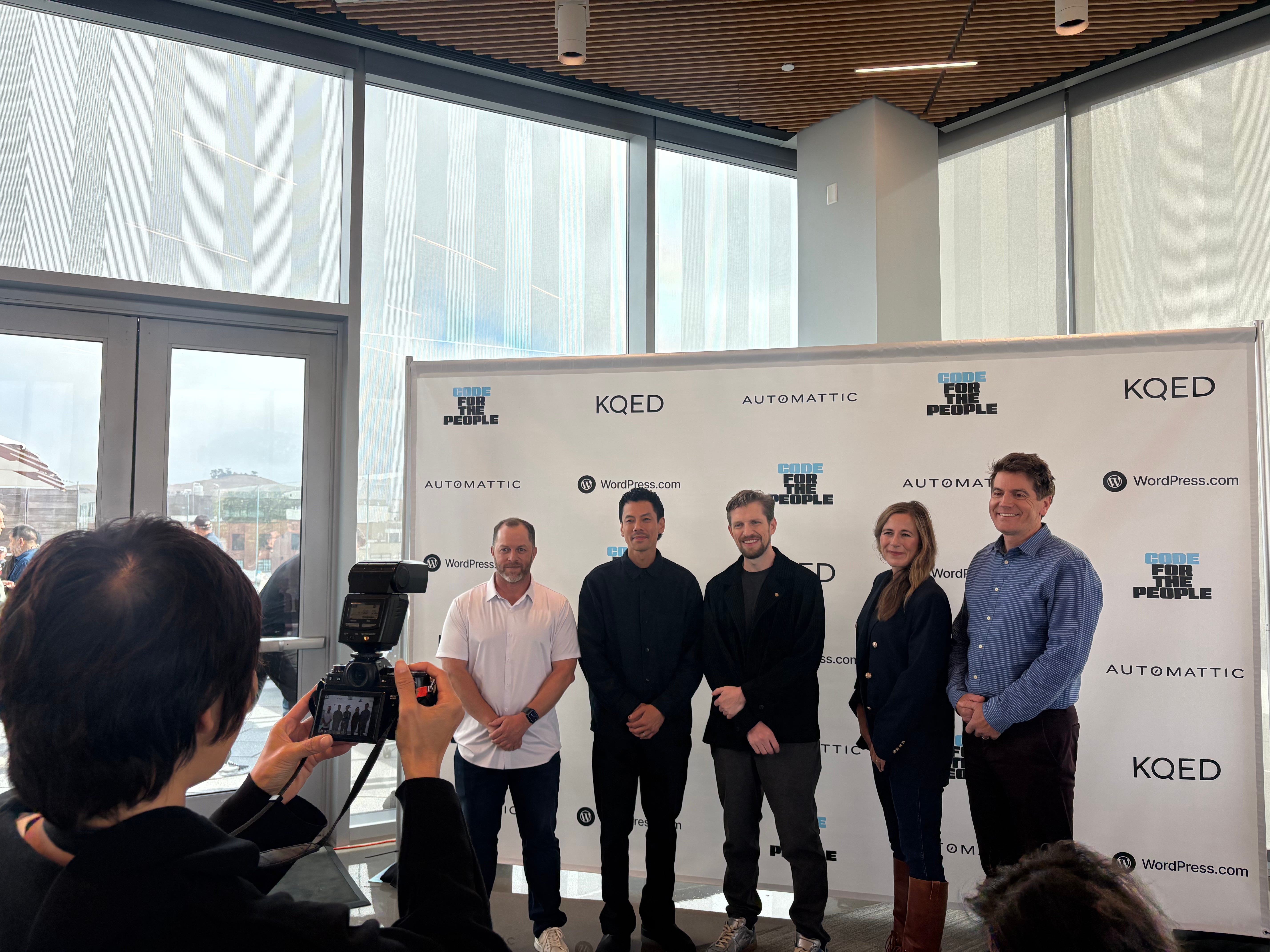
In the succeeding panel, producer Michael Dinh summed it up as a question for our future selves: “Did we contribute, did we hold people accountable, or did we watch the world burn?” (The room made sounds of startled amusement at this.)
I am more or less the target audience for the doc. I’m 23, which is old enough to have watched platform decay of some major social networks in real time. I’m technically a content creator who posts my original work on a closed-source platform (Substack), with an organization that wouldn’t exist the same way without the open internet’s removal of a barrier to entry (Hard Reset). The stakes they describe apply to me, and the context they provide is consistent with my own experiences. I came away from it understanding what the problem was, and skeptical of the optimistic proposed solution.
I spoke with another attendee afterwards, a former tech reporter of over two decades, who reflected my own feelings: the message of the doc is important. The messenger, being the head of WordPress, makes the piece itself feel a little like an ad, at times. She interpreted the call to action as a call for people to create their own websites, conveniently the service WordPress provides. “I agree with the ethos,” she reiterated, “but I wish someone else had made this.”
Later, I chatted with an older gentleman, a retired career-long software engineer, who had a similar takeaway. He told me he’s a fan of open source and its principles, but felt that the stated incentive of social contracts and giving back by using open-source platforms felt overly idealistic. He used Tinder as a quick example. “Nobody gives a shit if it’s open source or not,” he said. “They care if they can get what they want out of it.”
They both, separately and unprompted, told me that a discussion of government regulation felt missing from the story, besides a brief reference in the in-person panel following the screening. Mullenweg said that open source is “constantly under attack in ways you wouldn’t expect,” referring to government regulation and legislation like age verification. He called them well-intentioned slippery slopes, and that’s where that conversation ended. A seemingly more viable solution, and worthwhile discussion, is his own company.
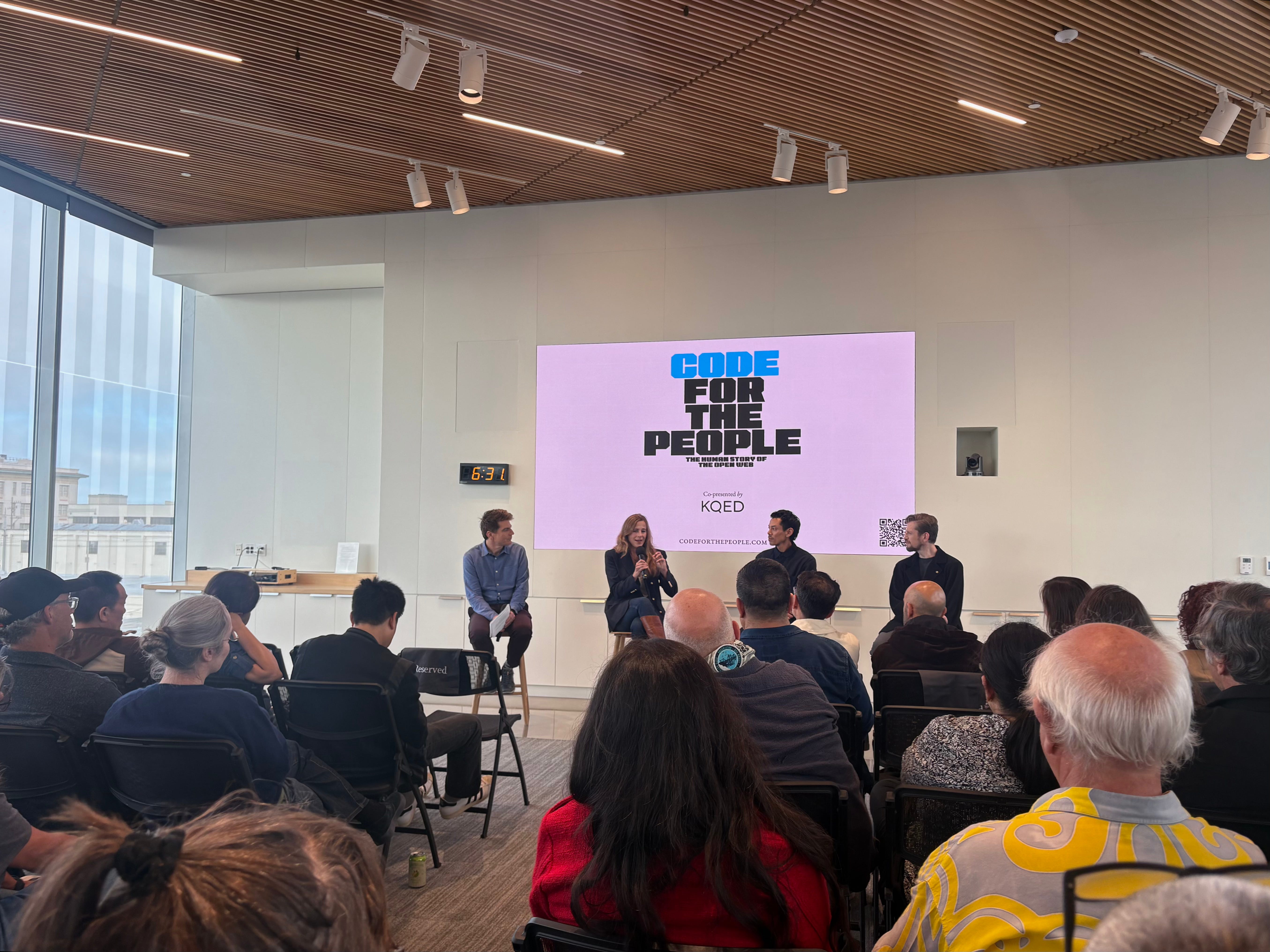
The creators and funders of “Code For The People” reiterated constantly that this is an optimistic, human-driven story about technology — in many ways, it is. One of my takeaways from its premiere was the value of open source itself, and I didn’t speak with anyone who disagreed. The internet has a problem the doc presented a viable solution for. The more prominent conflict I saw was the people asking them to fight for it, and how.
The documentary came out publicly today at noon. You can watch it for free here.
What else I’m paying attention to this week:
I went to an OpenAI Codex event hosted by HackerSquad expecting to see young AI founder hopefuls modeling themselves after Musk and Zuckerberg, and instead found a surprisingly human, collaborative atmosphere. It reminded me of the gap between the people making the tools and the tech leaders who have made an authoritarian swing.
Madison Square Garden was in the news this week for a wedding — have you heard more about that, or the apparent database of celebrities they’re keeping, noting their sexual orientation and quantifying them from “low to high risk”? After news that TSA-style face scanners were used around San Francisco during Pride celebrations last month, what does word of A-listers being tracked by sexuality mean for the rest of us?
Finally, there was a rumor going around that YC HQ had an AI simulator of Garry Tan. We were intrigued and tried to track it down to no fruition — it was just a Twitter joke — but at face value, it felt hilariously possible.
Matt M declared war against WPEngine, one of the biggest Wordpress hosts a year or two ago over some BS and because he felt they didn’t contribute enough to Wordpress (which they did). It’s ironic that guy would host this thing given that history and how jealously he has guarded Wordpress development