


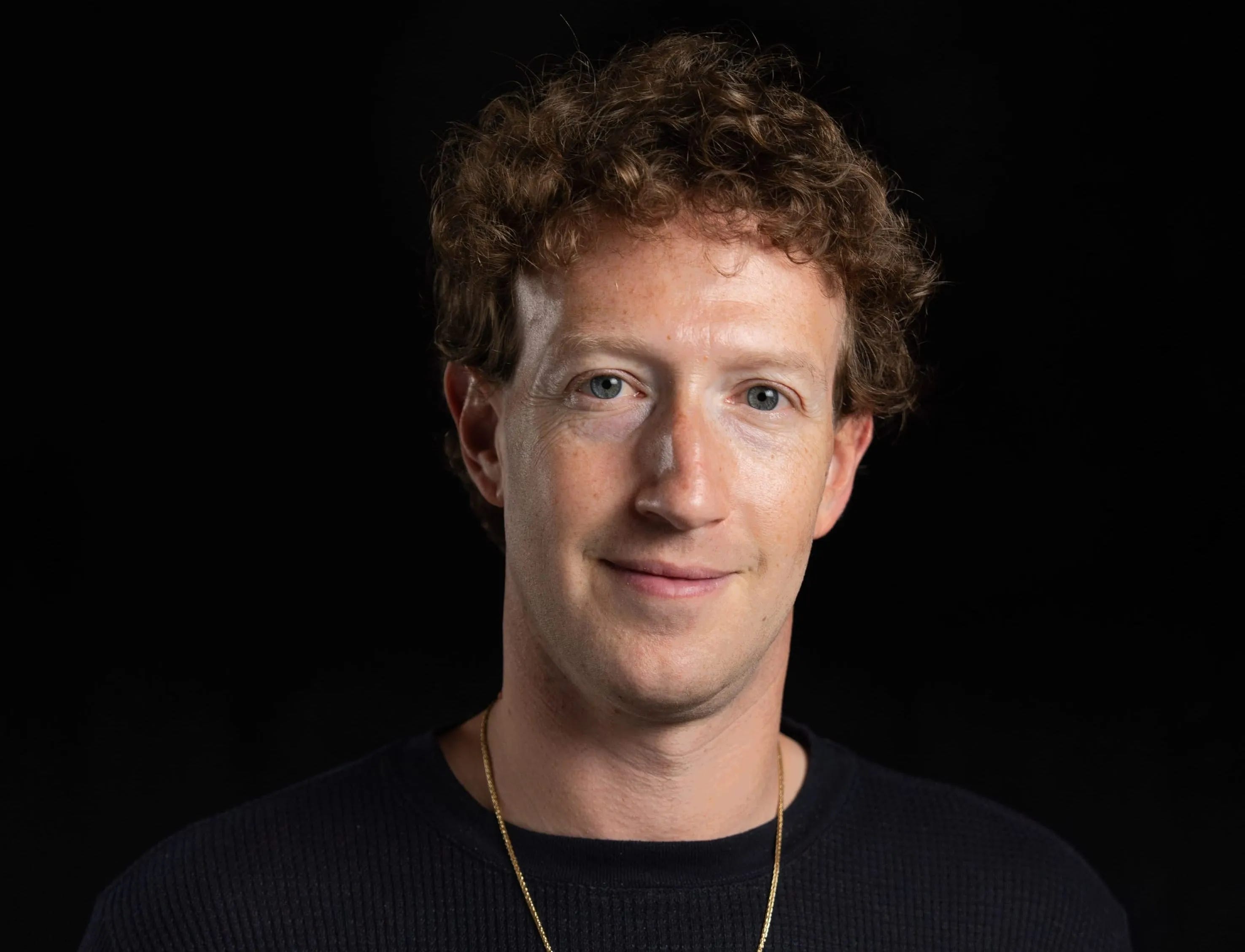
Mark Zuckerberg gave a rare “interview” to Feed Me, Emily Sundberg’s popular newsletter, this week. He answered eight banal questions, revealing to the world that he likes chicken tenders and Adidas slides, and, shocker, that he thinks his Meta glasses are the next big thing in tech. The questions were hand-selected by Sundberg, who admitted to her subscribers that she was “moderating the fuck out of this,” meaning the inquiries that she was actually going to present to Meta’s founder. According to Status, “several dozen questions made their way to Meta… but Zuckerberg and his team were able to select which ones he would answer.”
Sundberg doesn’t explicitly call herself a journalist, so I’ll keep my media critique to a single sentence: it’s in your best interest to convince the unlikable billionaire that he should address at least one of his controversies, so you don’t look like a complete sellout.
More interesting than whatever Sundberg was thinking is that Meta’s press team, presumably in conjunction with Zuckerberg, felt it was the right time for him to debut his upgraded personality model. Under Zuck’s leadership, Meta is having an abysmal three-month stretch—one of the most embarrassing quarters of any tech company, ever.
Meta executives have been sloppily apologizing for, and retracting, initiatives that were poorly rolled out and immediately protested by workers. Zuckerberg, meanwhile, has yet to actually say “I am sorry” or “I apologize” for anything. The best he’s offered, in a leaked memo obtained by Reuters, is that “we’ve made mistakes and will almost certainly make more.”
I do not think that response would fly at most companies. It’s the sort of thing Zuckerberg can say without (immediate) repercussions, because he has majority voting control of Meta. Zuckerberg’s disrespectful, aimless leadership style isn’t consequence-free, though. His string of fuck-ups, and the internal revulsion they’ve caused, remind me of Marc Benioff’s foot-in-mouth syndrome at Salesforce—just on a much larger scale.

I don’t know what comes next for Meta or its workers—I’m not sure anyone does, Zuckerberg included. That’s exactly the problem. Here’s a timeline of Meta’s last three months, which, written out, certainly reads like a company in peril.
Late March
Meta is found liable in two landmark cases centered on whether its apps are unsafe and designed to be addictive for younger users. The monetary damages are negligible, but open the door to other, potentially costlier lawsuits.
April
April 8: Meta announces its new AI model, Muse Spark. It’s fine, but doesn’t blow anyone away.
April 12: Mark Zuckerberg is eagerly participating in a project to build an AI version of himself that Meta employees can chat up in their actual boss’s absence. “Zuckerberg has become increasingly hands-on as he oversees Meta’s AI push,” the Financial Times reports.
April 17: Reuters reports that Meta is going to lay off upwards of 8,000 employees in May, which represents roughly 10% of the company’s workforce.
April 21: Reuters obtains another big scoop: Meta is going to install mandatory tracking software on the computers of U.S.-based employees via a tool called Model Capability Initiative (MCI). The tracking software is marketed internally by Meta as a net-positive way to train AI models on how humans interact with their computers. Actual humans at Meta are disturbed by the privacy implications of MCI, and are not enthused about helping AI eliminate their own jobs, especially with layoffs pending.
According to communications reviewed by the New York Times, many Meta workers immediately raised concerns about MCI. “This makes me super uncomfortable,” one worker wrote. “How do we opt out?” Andrew Bosworth, Meta’s CTO, callously responded, “There is no option to opt-out on your corporate laptop.” A Meta spokesperson assures the Times that “there are safeguards in place to protect sensitive content” picked up by MCI.

April 29: Meta’s first quarter earnings report looks great, raising the question: why is the company about to lay off 10% of its workforce?
April 30: During an all-hands meeting, Zuckerberg tries to flatter Meta workers by telling them that they’re geniuses; their collective brainpower is uniquely valuable for the MCI tool and the company’s AI models. “The AI models learn from watching really smart people do things,” Zuckerberg said, according to audio later obtained by More Perfect Union. “In general, the average intelligence of the people who are at this company is significantly higher than the average set of people that you can get to do tasks if you’re working through [contractors].”
May
May 12: Employees distribute flyers at multiple Meta offices, asking colleagues to sign an online petition against the MCI tool. “Don’t want to work at the Employee Data Extraction Factory?” the flyer reportedly asks.
May 14: The online petition, which demands that Zuckerberg not “collect employee ‘computer-use’ data for the purposes of training AI Models,” surpasses 1,000 signatures. The signatories are confirmed Meta employees, not outsiders.
May 18: Approximately 7,000 Meta workers are reassigned to new initiatives where they will be tasked with AI development. This work will be “more rewarding,” Meta’s head of HR assures workers in a memo. It is not. Ensuing interviews with anonymous workers are brutal. “It’s literally the gulag,” one worker relayed to Wired. “You have zero purpose in life all of a sudden, you barely interact with anyone, you just have these tasks every week.”
May 20: Meta officially lays off 10% of its workforce. (This is in addition to the reassignments.)
June
June 2: Meta CTO Andrew Bosworth reports for cleanup duty. During an internal chat, he admits that morale at the company is “maybe not the worst it’s ever been in 20 years here, but it’s probably up there. It’s definitely up there,” he said, according to Business Insider. Separately, Meta announces that it will allow for 30-minute tracking pauses to its MCI tool, as well as opportunities for workers to apply for MCI “exemptions.”
June 3: Online petitions against MCI surpass 1,600 signatures. Organizers object to Meta’s half-hearted MCI compromise, and reiterate their demand for a full ban on the tool.
June 12: A VP on Meta’s Applied AI team tells workers who were required to move to the company’s AI unit that they can now apply for other internal roles if they so choose. Reuters reports on a memo written by Zuckerberg, where he says the company has made mistakes and will make more. “I don’t want to overpromise because the world is changing in ways that are out of our control,” he says of what the future may hold for Meta workers.
June 14: Zuckerberg attends the UFC Freedom 250 event on the White House lawn.
June 15: Bosworth’s apology tour continues. According to Wired, he characterizes Meta’s enormous AI team restructuring as “atrocious,” and pledges to improve Meta’s snack offerings and travel budgets.
June 22: Meta workers’ months-long concerns about MCI are proven correct; Wired reports that “Meta left potentially sensitive information collected from employee laptops accessible to anyone inside the company.” The exact timing of when Meta became aware of the potential data leak is unclear, which Wired hinted at in its report:
“Meta spokesperson Tracy Clayton initially confirmed to Wired that the company is investigating the security issue. As this story was being published, he added that Meta is pausing the data collection program indefinitely. ‘We have carefully designed this program with privacy safeguards and while we have no indication at this time that any data was improperly accessed by Meta employees, we’re pausing it while we investigate,’ Clayton says.”
June 23: Unlike other major AI developers, Meta has yet to submit its AI models for voluntary review by the federal government, the New York Times reports. Also, Zuckerberg bravely tells the Feed Me newsletter that he’s a fan of chicken tenders.
June 24: Meta pulls back even further on its AI team restructuring. In a memo obtained by Business Insider, the company says it will now “defer to each individual’s choice,” rather than forcing workers to remain on the AI training unit.
June 25: A former Meta executive named Sarah Wynn-Williams sues the company, alleging it attempted to stop her from promoting her book about her time with the organization. The title of the book is “Careless People.”
Here’s what else we’re reading this week:
Alex Bores, who proposed some interesting AI policies, lost his House primary race to Micah Lasher on Tuesday. I’ve seen takes about how Bores’s narrow defeat is an ominous sign—the theory is that ideologues like Greg Brockman will be emboldened to meddle even more than they did in this race in order to defeat political candidates who suggest AI regulation. I don’t buy that theory.
New York’s 12th Congressional District includes Manhattan’s Upper West Side, Upper East Side, and Midtown; its voter base is older, wealthy, and unusually attuned to traditional endorsements and mainstream media coverage. The district’s outgoing representative, Jerry Nadler, endorsed Lasher, who scored a bunch of other noteworthy endorsements and ran as the “safe” option. Bores used to work at Palantir and was unable to fully secure the district’s left-flank of voters because he’s unabashedly pro-Israel. If anything, his AI stance may have helped him stay within striking distance, given his otherwise uninspiring campaign and background.
Apple announced that it’s raising the prices of its Mac computers and iPads. “We have never seen a component price increase this much, this quickly,” Apple said in a statement. Apple is referring to AI hyperscalers—the companies that run data centers—and their insatiable thirst for more memory and storage chips, which have become significantly more expensive. As a result, the same component parts are causing a price increase for consumer goods like laptops and phones, as the Wall Street Journal reported. Yet another reason for people to be annoyed by AI!
Anthropic is still trying to convince the White House to lift an export control directive that effectively banned usage of the company’s Claude Fable 5 AI model. Apparently, one of Anthropic’s new tactics is to keep CEO Dario Amodei as far away from negotiations as possible. Cofounder Tom Brown has been enlisted in Amodei’s place, which seems like a goo idea. “Tom Brown is not being a weirdo like Dario and can actually engage,” a source told Wired.
It's interesting that Meta's workers fought against mistreatment without a union. I kept thinking, unions were created to give workers a collective voice about work conditions.
1. How many of the workers would be open to a union? Would Zuckerberg fire anyone who engages in any union activity or just asks about forming one? Is there a blacklist of tech worker organizers? Or why isn't there a tech worker union symp blacklist is probably the better question.
2. When Zuckerberg's VR nonsense lost the company billions of dollars, not to mention wasted time and talent, he decided to fire the workers who did what they were tasked with. He didn't say I made an extremely poor decision, I wasn't accepting feedback that my decision was wrong that could have avoided this huge loss in money and credibility. We had to fire some people who great. I'm going to step back for a bit and let someone else run the company while keeping my 51 percent. The type of leader who doesn't take responsibility for their actions that hurt their team is not worthy of respect.
3. It turns out Zuckerberg has a low opinion of his organization's contractors. Are the contractors doing substantially simpler work than the full timers. Why does Meta use contractors? Do they get to opt out of things they are uncomfortable with or just get fired? This also gets me wondering how are non technical staff treated?
4. Trying to improve morale by improved snack offerings during punitive layoffs is something else. Those people are not serious or they despise their workers.
5. The idea of using LLMs or decision support systems to replace all the human workers seems ridiculous because most things people do aren't captured by a simple decision tree. Even if you could how many hunters
Hundreds of thousands of tasks are worth automating let alone dealing with edge cases, concurrency problems.
6. And then it wasn't engineered to prevent data leaks. I haven't worked at that level but with all the code analysis tools and engineering best practices I don't think there's any excuse for data leaks of that sort.
7. Why is it that these CEOs think only their job shouldn't be automated.
Funny he got asked about the feed. The answer is "more slop on the way".