


Before you read this, consider going outside. This Saturday, March 21, Hard Reset Media and Climate Action Club are hosting a guided naturalist walk through Golden Gate Park with forager Nick Robertson—two hours of edible plants, local wildlife, and conversation about tech and climate, followed by lunch. If you work in tech and could use a few hours away from a screen, this one’s for you. Register here.
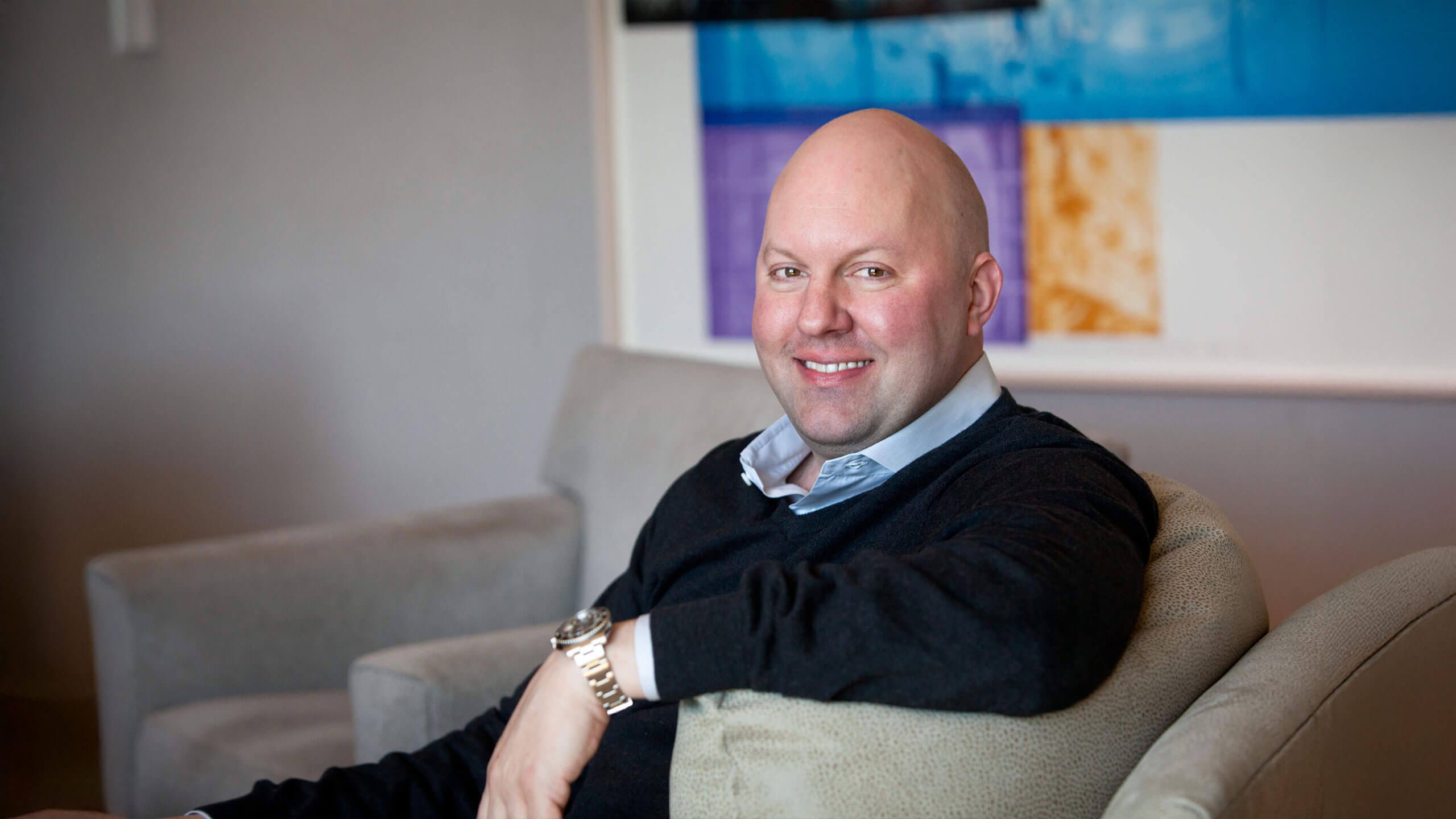
Marc Andreessen is a 54-year-old man who recently posted on X about “retardmaxxing,” so I very much wish I did not have to consider the inner workings of his mind. Unfortunately for me and the rest of the world, Andreessen is a billionaire venture capitalist with tremendous sway. His firm, Andreessen Horowitz, is a major funder of “defense technologies” (my scare quotes), some of which are being utilized by the United States military as part of an unjustifiable war against Iran. Andreessen was one of the first Silicon Valley elites to team up with President Trump and the MAGA movement, and his group chats are where other billionaires’ brains are poisoned by nonsensical grievances.
Point being: Andreessen’s opinions and decisions matter quite a bit. Which is why earlier this week, Andreessen was able to generate a round of social media discourse because he proudly stated on a self-help podcast that he doesn’t indulge in introspection.
“I found people who dwell in the past get stuck in the past,” he said. “It’s just a real problem. It’s a problem at work and a problem at home.” Podcast host David Senra responded that in his reading of more than 400 biographies about entrepreneurs, almost all exhibited “little or zero introspection.” Senra framed this phenomenon as a good thing; it is not, and although I am a proponent of reading all sorts of books, I also firmly believe no one should read 400 biographies about entrepreneurs.
Andreessen vigorously nodded along, adding that 400 years ago, it “never would have occurred to anybody to be introspective… great men of history didn’t sit around doing this stuff.” He conflated the process of introspection with going to therapy, and dismissed the idea that “the individual needs to feel guilt.”
Andreessen has struggled to defend himself in the days since his historically illiterate and trollish take went viral. He first tried out painfully unfunny jokes about making AI his introspection-focused therapist. Then he favorably invoked Steve Jobs as a fellow entrepreneur who didn’t concern himself with introspection, which is true enough: a crucial part of Jobs’s legacy is that he was averse to self-analysis and needlessly cruel to colleagues and family.
Andreessen also quadrupled down on how “Introspection = neuroticism x narcissism x thumbsucking,” and when that didn’t annoy enough people, he baited “navelgazers” to “ratio” him for his contrarianism. (He has blocked large swaths of X, including me, making it difficult for him to be ratioed on what remains of X; has he considered the irony of taunting a group of people he refuses to hear from? No.)
I appreciate Andreessen’s honesty, if for no other reason than it causes other people to reflect on his behavior and worldview. The general consensus about Andreessen’s remarks and ensuing crashout is that he is gallingly out of touch and acting like a psychopath. The aforementioned podcast clip is making its way around normie portions of the internet, meaning people who are not tapped into politics and tech. If they previously recognized Andreessen, it was almost certainly because of his peculiarly shaped head. Now there’s something else they’ll remember him by: as the guy who scoffs at bettering himself, accepting blame, and making amends.
It takes a long time for these signifiers to stick, but it’s a big deal when they do. After his Nazi salute, X takeover, and MAGA alliance, Elon Musk has become roughly as unpopular as President Trump. Every time OpenAI CEO Sam Altman speaks into a microphone, he says something unsettling about AI and humanity and accidentally creates dozens more luddites. Salesforce CEO Marc Benioff has two modes: offensive joke and bad/belated apology. Palantir CEO Alex Karp and Anduril CEO Palmer Luckey are piling up their own Weird Guy clips; they aren’t as famous yet, but with the way the Iran war is trending, they’re well on their way to infamy.
All of these tech titans—Andreessen included—have tried very hard to remake society while insulating themselves from society, but they are at least failing at the latter. Their off-putting views are rapidly and regularly breaking containment, no matter how friendly the platform.
As I see it, the increasing notoriety of figures like Andreessen has two notable outcomes. One: tech workers are afforded a permission structure to speak out about their billionaire bosses and the unethical decisions made by multinational companies. That was much, much more difficult for tech workers a few years ago, when any hints of dissent were viewed as disgruntled, libbed-up temper-tantrums. A few years later, it is obvious who’s throwing the temper-tantrums and acting irrationally. It is not a rank-and-file Salesforce worker who objects to a joke about ICE after its agents kill two Americans. This does not mean raising objections about your employer is consequence-free, of course—just that the dynamic has evolved for the better. Regular people think Big Tech CEOs have serious issues. It’s much easier to call out disquieting behaviors when the public is on your side.
Secondly, it isn’t just normies who are being exposed to bizarro billionaires. It’s also a select pocket of tech workers who—and I say this with love—may have taken a few too many sips of the Kool-Aid. I especially understand this impulse among workers who believe in their company’s mission, or love the work they’re doing, or feel that they are helping craft an important product. All of those sentiments might be true! Andreessen himself is wildly successful because he was a brilliant software engineer who helped make the internet accessible.
But Andreessen is also, by his own admission, unwilling to look inward—a deeply troubling trait that is shared by other Big Tech CEOs. The most straightforward way for tech workers to grapple with this reality is if billionaires like Andreessen keep spouting off. Luckily, I don’t think that’ll be a problem.
Here’s what else we’re reading this week:
Page Six reported that playwright Jeremy O. Harris went up to Sam Altman at Vanity Fair’s Oscars party and called him a Nazi. More specifically, he said Altman is the Goebbels of the Trump Administration. I know what you’re thinking: Alex, why are you trusting a tabloid to relay an accurate representation of a boozy interaction? Answer: Harris confirmed the report. In an email to Page Six, he wrote, “It was late and I had a few too many martinis so I misspoke when I said Goebbels… I should’ve said Friedrich Flick.” According to Page Six, Altman “responded calmly.” If you have more information about the back-and-forth, please hit my tip line (my Signal is ajshultz.13).
Polymarket is now in business with Major League Baseball, the latest GambleWashing partnership intended to lend legitimacy to a platform that allows you to bet on war and regime change. It sounds like Polymarket will be adding official team logos, so your sports bets (or at least your MLB bets) will look a little bit less like they’re being placed on AI-generated clubs.
San Jose Mayor Matt Mahan’s gubernatorial run is off to a “disappointing start,” according to a Politico feature, and some of his Silicon Valley donors “have gotten cold feet in recent days.” He’s been on an unwieldy media tour, including comparing himself to New York City Mayor Zohran Mamdani while disavowing Mamdani’s signature policies—a triangulation effort that pleases no one. I wrote about Mahan and the sad state of the California governor’s race last week.
I enjoyed this New York Times profile about Wired Editor-in-Chief Katie Drummond, who’s spearheading really impressive, hard-hitting journalism about tech and the world at large. Wired reportedly added more than 200,000 paying subscribers last year, which is an incredible feat for an outlet in 2026.
For the longest time every time Marc Andressen said something insulting about people who were not billionaires I'd think but he made Mosaic.
This year I stopped thinking about Mosaic. He wasn't the only person working on that. His opinions and values show that outside of writing software he is not someone I would need to consider about anything.
I would happily ignore him. Instead of counting gods billions and polishing his head all nice he keeps getting mad about folks who don't even have enough to get a mortgage.
So alas we're condemned to be in each other's lives.
Something I've learned Andressen and other trans humanists is they are really into gambling, making up weird statistics and probabilities out of strange imaginings.
They all seem like Sam Bankman-Fried