


Pía Garavaglia is an economist and researcher specializing in labor markets, digital platforms, and the impact of AI on work. Her work focuses on employment dynamics, regulation, and labour rights in the platform economy, with a particular emphasis on Latin America and the Global South.
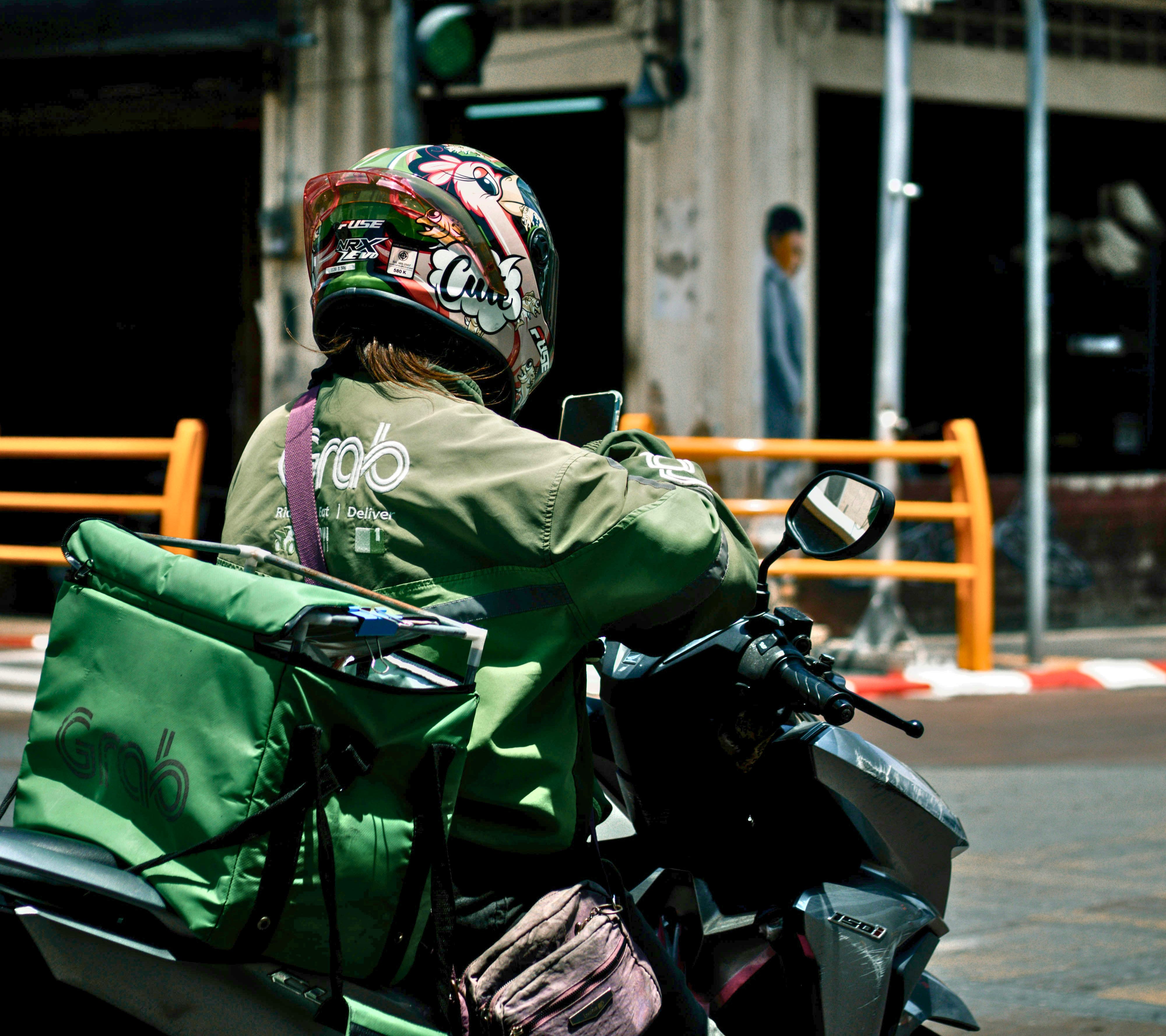
Matías, a 34-year-old delivery worker in Buenos Aires, works six days a week, usually for long shifts. “I work six days a week, between 10 and 12 hours a day,” he told me recently. “On average, each hour is $9.50 (USD) per hour”. His story captures a central tension in platform work: the promise of flexibility often coexists with long hours, unstable earnings, and app-based systems that shape how work is assigned, priced, and controlled.
In a few weeks, governments, employers and workers will gather at the International Labour Conference (ILC) to negotiate what could become the first global standard on platform work. The agenda is full of technical terms—scope, definitions, algorithmic management. But beneath all that sits a much simpler question, one that will ultimately determine whether this new standard changes anything at all:
Who counts as a worker?
Across the platform economy, millions of people log in every day to perform tasks they do not fully control. They do not set their prices. They do not choose how tasks are allocated. Their performance is constantly monitored, rated, and ranked. And, at any moment, their access to work can be reduced or cut off entirely, often without explanation.
None of this is hypothetical. It is the everyday reality of delivery riders navigating city traffic, drivers absorbing the cost of fuel and maintenance, and data workers labelling content behind the systems we call artificial intelligence. Much of this control is no longer exercised by a human manager, but by automated systems that decide who works, when, and under what conditions.
And yet, most of these workers are not legally recognized as workers.
They are classified as independent contractors — a category that has been at the centre of high-profile legal battles in places like California, but which in much of the Global South operates in contexts of high informality, where platform work often replaces formal employment altogether.
This is not a technical oversight. It is the foundation of the business model.
Employment status determines access to minimum wage protections, social security, collective bargaining, and protection against unfair dismissal. It determines whether platform work can be considered decent work at all. And that is precisely why it has become one of the most contested issues in the ongoing negotiations at the ILO.
Earlier stages of the process—documented in the ILO’s draft Convention and Recommendation on platform work—acknowledged the problem of misclassification and opened the door to mechanisms such as determining the existence of an employment relationship based on the reality of the work performed. But as negotiations have progressed, the language has shifted toward a more flexible, “principle-based” approach, leaving significant discretion to national frameworks.
On paper, this may sound like a pragmatic compromise. In practice, it risks something else entirely: legitimizing the gap between how platform work is organized and how it is regulated.
Because the defining feature of platform work is not flexibility, it is control. Control over pricing, over task allocation, over visibility, over access to income. Increasingly, this control is exercised through algorithms that are opaque, unaccountable, and difficult to challenge. The question is not whether these systems exist. It is whether they will be recognized as forms of managerial authority.
This is why the debate on employment status cannot be separated from the debate on algorithmic management. If a worker’s access to work is determined by an automated system, if their income fluctuates based on dynamic pricing they cannot influence, if their account can be deactivated without due process, then the distinction between “independent contractor” and “employee” begins to collapse.
Workers themselves have been making this point for years. What is new is the scale at which they are now organizing globally.
The Global Platform Workers Solidarity Project (GPWSP) brings together grassroots organizations of platform workers from 34 countries, spanning sectors that are often invisible in these debates: care and domestic work, home services, and the data labor that sustains AI systems. What is at stake is often framed as a trade-off between flexibility and protection, or between innovation and regulation. But this framing is misleading. Recognizing workers as workers does not eliminate flexibility. It simply ensures that flexibility is not built on the erosion of fundamental rights.
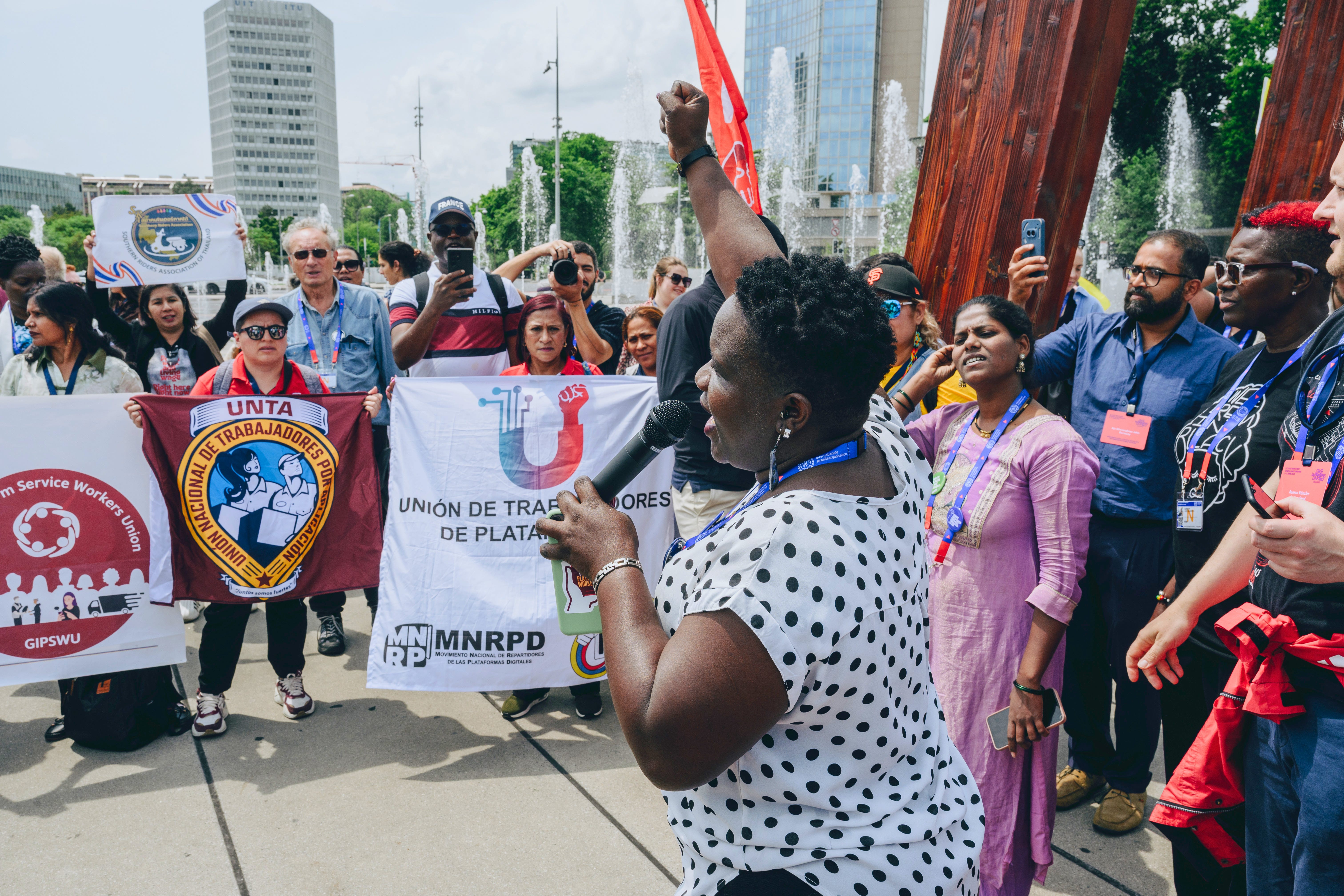
And even beyond the employment debate, a growing number of worker organizations have been making another argument for years: if governments and companies insist on treating platform workers as self-employed or “own-account” workers, then fundamental rights and protections should not disappear as a consequence.
This is not a new discussion. Organizations representing informal workers, domestic workers, street vendors, and home-based workers have long argued that labor rights cannot depend exclusively on the existence of a formal employer. Millions of own-account workers operate outside traditional employment relationships while still requiring collective bargaining rights, social protection, occupational safety protections, and recognition under labor frameworks.
This matters because platform companies are constantly restructuring and redefining themselves to avoid being recognized as employers. If labor protections remain tied exclusively to narrow definitions of employment, workers risk permanently falling through regulatory gaps while companies continue evolving faster than the law.
The point, ultimately, is not semantic. Whether platform workers are recognised as employees, dependent contractors, or own-account workers, there should be no model of digital work that allows people to be excluded from fundamental labor rights, collective representation, due process protections, and basic social security.

A digital economy that depends on denying labor protections is not innovative. It is extractive.
The ILO process represents a rare opportunity to set a global baseline—to define not just how platform work operates, but what kind of work we are willing to accept. But for that to happen, the Convention will need to confront the issue at its core. Not in abstract terms, but in concrete ones.
Because at the end of the day, the question is not particularly complex: If work is organized, controlled, and monetized in this way; if livelihoods depend on it; why shouldn’t rights apply to it?

Sharp observations and questions, thank you