


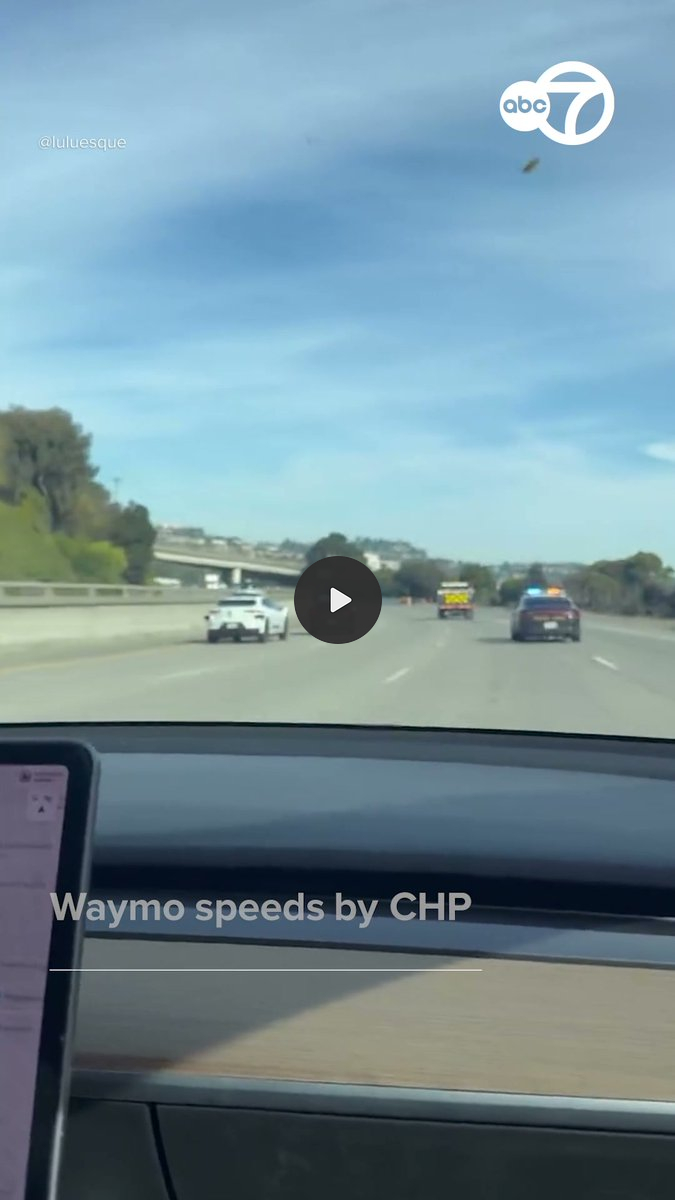
Earlier this month, California’s DMV ordered Waymo’s driverless cars off its freeways and highways effective immediately after a viral series of traffic violations. In response, Waymo voluntarily pulled its driverless cars from highways across its markets. The company has said it’s working closely with regulators, and has not indicated a timeline for its cars to return to freeways. It likely won’t be soon.

Why did Waymo respond cooperatively and proactively to California’s suspension? It’s a hit to their airport services and expansion efforts to wider metropolitan areas.
Andrew Hawkins, transportation editor of The Verge, told KJZZ Phoenix that the stakes are high right now for Waymo to prove it is receptive to regulators and prioritizing safety, as the company eyes international expansion in London and Japan next year.
“I think they realize that if they compromise this reputation they have for a safe operation,” Hawkins told KJZZ, “Some of that market expansion and that scaling is going to be seriously under threat.”
The weight of California’s regulatory influence, especially where tech is concerned, works when the infrastructure is physical; The California Effect, where stricter regulation locally becomes the wider standard due to the sheer scale of its economic influence, originated from auto industry regulations in the 60’s.
Today’s driverless car companies have to comply with the laws and regulators wherever they want to operate, and a solid working relationship with Californian regulators is a good look for future expansion.
Whether the California Effect will translate to AI remains to be seen. There have been tentative victories: even though California’s baseline AI regulation law is far weaker than originally drafted (and endorsed by Anthropic and OpenAI) several states have adopted similar bills. But, a product that exists in the digital space is more difficult to regulate across borders and localities than a driverless car.
California intervened when robotaxis posed a safety risk for the public; now, as the state sues OpenAI, it examines how to hold AI companies responsible for similar risks.


The lawsuit alleges OpenAI “misled and endangered the public and users of its services by knowingly developing advanced AI models—complex software that can power autonomous AI “agents”—without the safeguards and monitoring necessary to adequately protect the public.” It references the infamous Hugging Face cyberattack by one of their models, and criticizes OpenAI’s “rogue” agent as a self-serving sci-fi narrative allowing the company to disclaim responsibility for preventable harm. It accuses the company of developing advanced capability technology without simultaneously implementing training safeguards, and says the external attacks are a “predictable result of an internal culture at OpenAI that prioritizes growth and rapid model development over safety and accountability.”
Hugging Face was the landmark moment for autonomous hacks, but the suit names several others that have happened since — including websites and databases of foreign governments — and says the known attacks “may just be the tip of the iceberg. OpenAI recently admitted to the Attorney General’s Office that it has lost control of its autonomous AI agents over 80 times during testing.”
Read this next excerpt from the suit with California’s recent barring of Waymo from highways in mind.
“While the technology OpenAI develops may be new, California’s prohibitions against conduct that harms the public and our laws against unfair, deceptive, and fraudulent business practices are not. OpenAI’s deficient safety procedures, disregard for public safety, and knowing testing of a dangerous product without proper oversight, as well as its misleading statements to consumers and the public, all violate California law. Accordingly, the People bring this law enforcement action to enforce California’s consumer protection laws and to abate the public nuisance caused by OpenAI.”
Like Waymo, OpenAI and its competitors have made public-facing commitments to safety and regulation; it’s good PR. Unlike Waymo, and any other tech company with physical products that fall under existing regulatory bodies, AI companies deploy their products (or allow them to deploy themselves) into the nebulous digital space, where agents can violate local and federal laws without being subject to the same regulatory oversight as physical products. In California, efforts are underway to prevent Frontier AI from disclaiming responsibility for its agents; hopefully, we’ll soon see a direct line of civil, and if necessary, criminal accountability for agentic activity to the parent companies.
We were able to discern who is responsible when a driverless car commits a crime, and when their access should be restricted for the safety of the public. Agentic AI is a unique technology, but not a transcendent one devoid of human accountability. It’s astonishing to watch wealth and power accumulate to unprecedented levels in the AI industry, just for the companies building it to dodge legal accountability for what they’ve built.
Waymo is the telling example. The regulator could act because the car was visible, its owner was named, and the violation was recorded. Agentic AI hides all three. I would start with the same three facts for every agent, who owns it, what it may do, and where its log lives, before asking whether the law can reach it.