


Matt Scherer is a fellow at Open Markets Institute, where his research and advocacy focus on developing policy responses to the eventual bursting of the AI bubble. His Hard Reset pieces will focus on highlighting the risks posed by the AI bubble and pushing back against the hype that is inflating it. The opinions expressed here are solely his own.
If you have read any media coverage of AI, there’s a pretty good chance that you’ve seen breathless quotes comparing AI to the most transformative developments in the history of humankind. According to AI enthusiasts, AI will remake our lives in the same way that controlling fire, the Industrial Revolution, and electrification remade those of our ancestors.
But what if, instead of initiating a technological revolution, today’s AI systems end up being like…the Wankel engine?
During the 1950s and 60s, the automobile was in many ways the centerpiece of the United States’ society and economy. The Beach Boys sang hit songs about muscle cars, the new Interstate Highway System made commuting and long-distance road travel easier than ever, and GM, Exxon, and Ford spent nearly the entirety of the 1950s and 1960s occupying the top three spots in the Fortune 500.
Right as the automobile was reaching the peak of its social and economic power, a German engineer named Felix Wankel developed a new engine that was billed as having the potential to be much more efficient than the nearly century-old internal combustion engine. The Wankel engine had a rotary design, which, in theory, should have made it dramatically more efficient and reliable than complex piston-driven engines. The Wankel was also smaller, quieter, and had fewer moving parts.
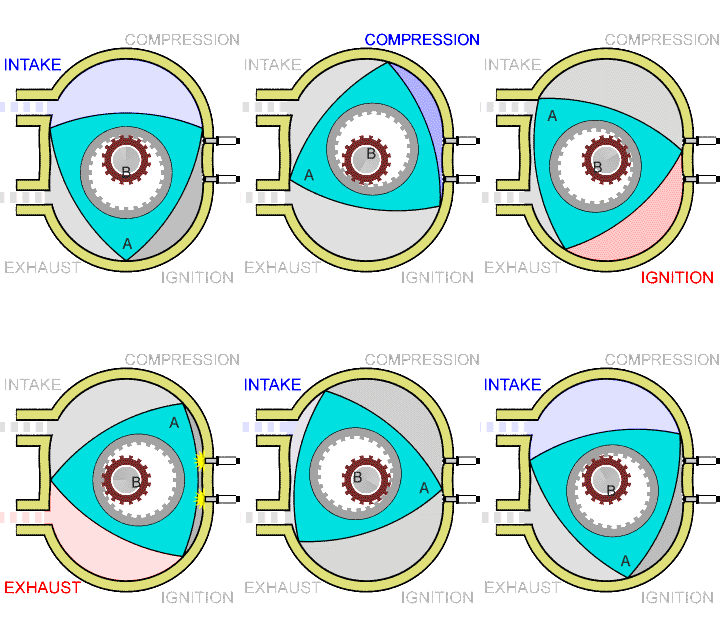
The Wankel engine design. Attribution: WikiMedia Commons.

Automakers and investors alike salivated, as described in Brent Goldfarb and David Kirsch’s 2019 book, Bubbles and Crashes. When the technology was first introduced in Europe in the mid-1960s, including a Mercedes that could go from zero to 60 in 4.3 seconds, a speculative bubble developed around the technology. Investors and the media alike ignored occasional reports of design flaws that could render the Wankel engine incapable of living up to its hype. When sales started off slow, Wankel boosters instead blamed the technology’s rocky rollout on over-regulation.
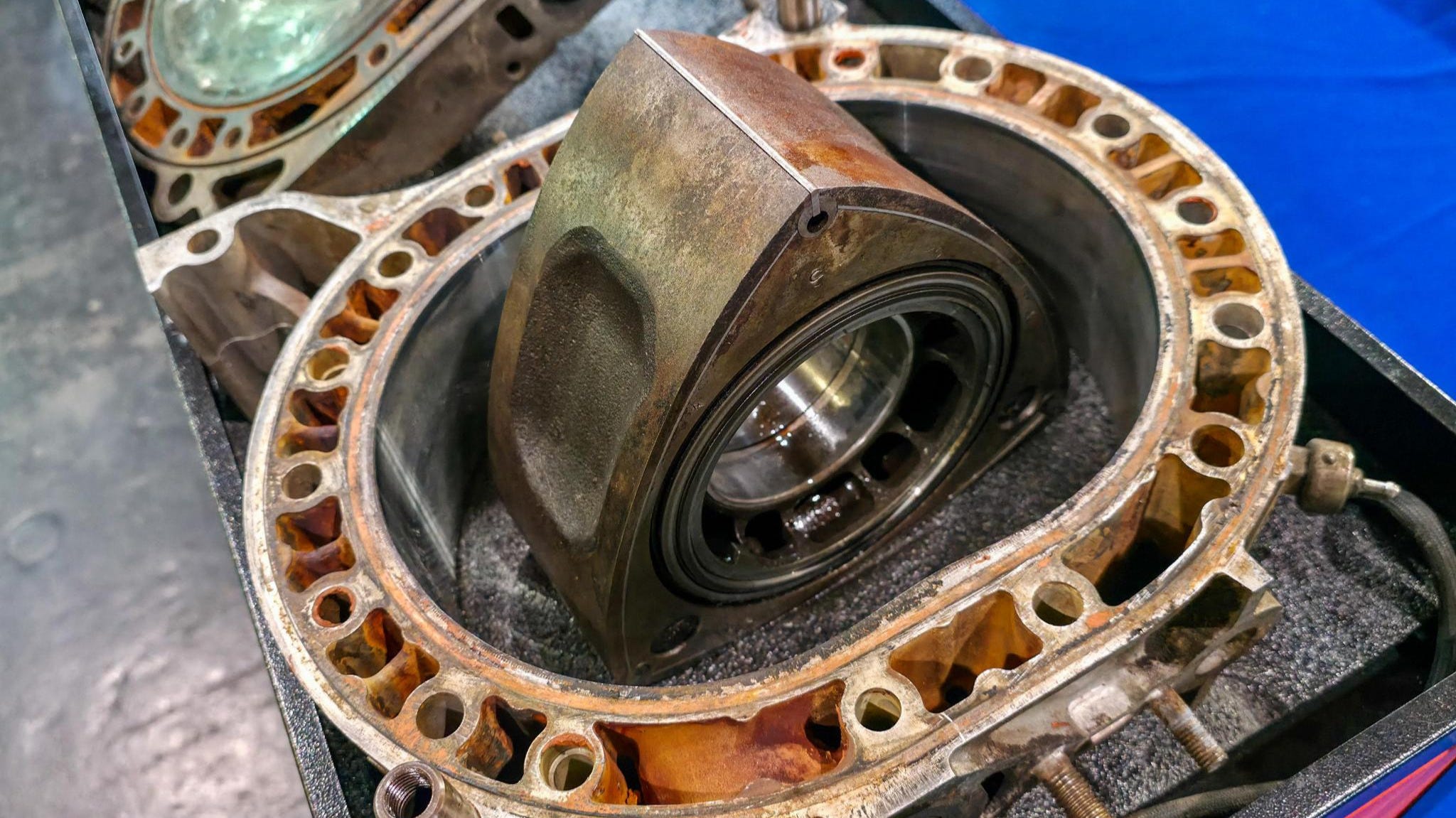
As it turned out, the engine’s technical limitations made it commercially impractical. GM licensed the technology but never brought it to market after it discovered that difficulties in sealing the rotating engine made Wankels less efficient and reliable than the clunkers it was supposed to replace. Investors in the companies that had promised a Wankel revolution ended up losing their shirts.
“Speculators,” as Goldfarb and Kirsch put it, had “underestimated the likelihood of technological failure.”
Fortunately for the U.S. economy, neither GM nor any other major corporation had bet the company on the Wankel engine. No auto manufacturer had fired their old engineering experts or shut down production lines for cars with traditional powertrains. Had they done so, the United States’ most important industry could easily have experienced a crash big enough to send the whole country into recession.
The story of the Wankel engine raises important questions that we should be asking ourselves today: What would happen if the country’s largest industry did go all-in on a technology that was fundamentally incapable of achieving its hype? To go one step further, what if the entire economy somehow transformed into a giant bet on the success of such a technology?
We may be about to find out.
The tech industry dominates the U.S. economy today to an extent the auto industry never did. The ten most valuable U.S. corporations are all tech companies that (with the partial but notable exception of Apple) are pinning their futures on the success of generative AI, especially large language models like those that underpin ChatGPT and its competitors. The AI industry is in the midst of an $8 trillion spending splurge to build the data centers and buy the specialized chips needed to train and run generative AI models. To recoup that investment, which is increasingly fueled by risky debt, AI companies will have to generate trillions of dollars in additional revenue by 2030.
The hope appears to be that AI will return this value by automating vast swaths of white-collar work, a prospect that SpaceX raised in its prospectus, which suggested that white-collar work was a $26 trillion market that AI companies could seize. SpaceX’s arithmetic is dubious — as economist Aswath Damodaran noted in a recent podcast, $26 trillion is more than the employee expenses of all publicly traded companies combined. But even if there were $26 trillion worth of work to automate, generative AI doesn’t look like it’s up to the task.
Over the past year, studies and surveys have repeatedly found that most companies are not seeing any return on their AI investments. This should not be surprising; AI systems frequently make mistakes, including an alarming number of catastrophic failures. Such workslop means that much of the human labor saved at the front-end by delegating a task to AI is lost at the back-end when a human has to come in and clean up the bot’s mess.
The use case where AI has shown its greatest commercial potential is computer programming. As NYU professor Zeynep Tufekci wrote in a recent New York Times column, the output of coding “is either verifiably right or wrong, functional or not functional, and can be definitively checked through an automated process.” That makes coding a task for which generative AI should be uniquely suited.
But even in coding, it is far from clear that AI is actually adding value. According to the enterprise data company Entelligence, for each dollar that companies spend on AI coding tools, 44 cents goes towards fixing AI-generated bugs, 27 cents goes towards rewriting the code, and 11 cents is lost to other inefficiencies from the code review process. In other words, the vast majority of AI coding dollars are wiped out by the effort needed to fix AI’s coding mistakes. Only 18 cents of each dollar actually reaches users as a shipped product.

Attribution: Entelligence.ai
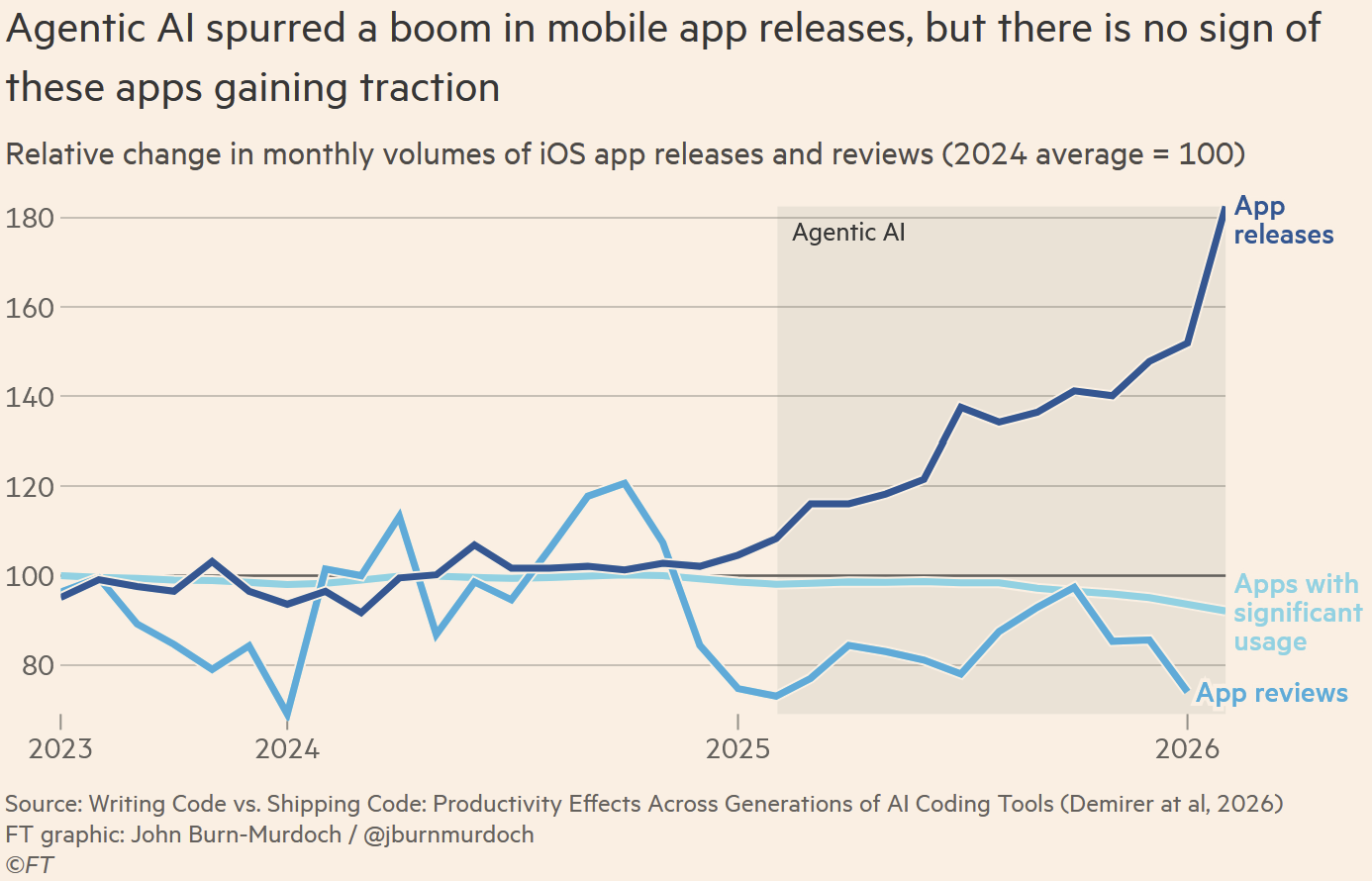
Even this may overstate the value of AI coding. While the number of iOS app releases has shot up since AI coding took off last year, the number of apps with significant use and the number of app reviews have actually declined, suggesting that even the “shipped product” is often worthless.
And remember, coding is something that generative AI is supposed to be especially good at. In other settings, particularly those where the cost of errors is high, AI can be close to unusable. AI-driven legal tools frequently generate inaccurate or incomplete case summaries, non-existent quotes, and even entire opinions that simply do not exist. Such errors can result not only in embarrassment and wasted time; they also can lead to judicial sanctions and (most important to corporate lawyers) having to write off billable time and even pay opposing counsel’s fees.
AI boosters try to dismiss AI’s failures to generate — and their alarming tendency to destroy — economic value by claiming that AI is merely experiencing growing pains, often by citing dubious models favored by corporate consultants like the “productivity J-curve” and the Gartner hype cycle. Those models suggest that while productivity may initially fall with new technologies, they eventually rise after companies figure out how best to use it. Under the Gartner hype cycle, innovative new technologies enter a “trough of disillusionment” after an initial surge of interest, but the trough eventually gives way to a “slope of enlightenment” that ends with a “plateau of productivity.”
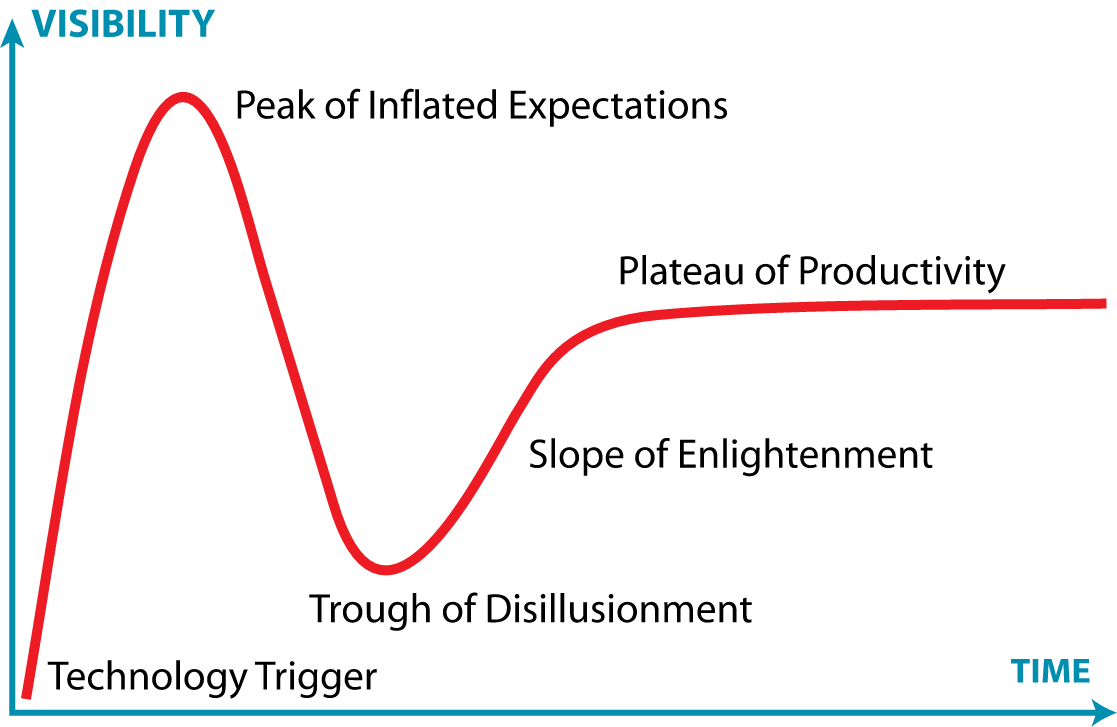
Attribution: Jeremykemp at English Wikipedia
But many technologies never recover from their initial growing pains. The Economist found that six of ten technologies that enter the trough of disillusionment never rise again. As the Wankel engine shows, sometimes that trough deepens into a depression.
A depression could, sadly, be exactly where all of us are headed. Unlike with the Wankel engine, the world’s largest companies are going all-in on generative AI, racking up trillions of dollars in debt and cannibalizing key resources from the rest of the economy in the process. Tech companies are firing software engineers and companies are replacing administrative workers with AI, often with predictably awful results.
Right now, fears surrounding AI tend to focus on what will happen if the technology does live up to its hype and put tens of millions of people out of work. But AI failing to achieve its supposed potential could bring about a different kind of economic catastrophe. There simply is no precedent for what happens when an industry that dominates the global economy bets the proverbial farm on a fundamentally flawed technology. If AI turns out to be a dud, it could be the economy that goes up in flames.
The answer is probably somewhere in between. It'll be somewhat useful. And somewhat overhyped.
I do know that most individuals who choose to use AI are in the end, going to choose the cheaper models coming out of China, etc. So I'd be amazed if there isn't a crash in The US.
I'm in disbelief that someone wrote an article about Wankel without mentioning Mazda.
Mazda is not a US company, but they did "bet the company" on Wankel. By 1973, they were selling almost 2 million Wankel-powered cars per year. After the '73 fuel crisis, Mazda mostly reverted to piston cars, but still sold 600,000 Wankel cars per year until the mid-'80s.
I don't think that Mazda's successful use of Wankel implies anything about the future of AI. But calling Wankel a failure without even mentioning Mazda is ... incomplete.